



Is Justin Jefferson’s 2025 Struggle All on Him, or Is There More Behind the Scenes?
When the headlines spiral and the easiest scapegoat becomes the quarterbacks, it’s tempting to just nod along and move on. But seriously – have you ever wondered how much of Justin Jefferson’s rough 2025 season is genuinely on the QBs, and what happens if you take them out of the picture entirely? The frustration around Jefferson’s dipping numbers and sideline outburst has been loud and clear, sparking questions not just about who’s throwing the ball, but what’s really going wrong for this two-time All-Pro star. With stats taking a nosedive and double coverage piling up like never before, it’s high time we peel back the layers beyond the obvious and figure out if Jefferson’s struggles are all that they seem. Dive into the data, the drama, and the undeniable drop-off that’s got everyone buzzing about whether the Vikings’ star WR is merely a victim of circumstances – or something more intricate altogether. LEARN MORE
The easy answer is to pin Jettas’ disappointing NFL season on the quarterbacks. But is there more to it than that? What happens if we remove QB play from the equation?
The frustration has been more than palpable.
In fact, it’s been front and center.
Justin Jefferson’s lack of involvement and the ongoing questions about his alarmingly poor production led to a boiling point earlier this season. Then things seemed to simmer down for a while before heating up again more recently.
The two-time AP All-Pro First Teamer’s sideline tirade went viral during and after the Minnesota Vikings’ 19-17 home loss to the Chicago Bears in Week 11. It was another game in which redshirt rookie J.J. McCarthy struggled throughout, and Jefferson finally erupted by waving his arms around before walking off the field and slamming his helmet.
Two weeks later, Jefferson opted not to speak to reporters after the game for the first time in his career following a 26-0 road loss to the Seattle Seahawks. He ended up with just two catches for a career-low 4 yards as the Vikings were shut out for the first time in 18 years.
“It’s probably one of the most difficult seasons just off of the circumstances, having a young quarterback, having a different team, having young players on the team,” he finally explained later in the week. “So it’s just one of those years. Not every year is going to be a top-tier year for me. It’s really a part of the game, so it’s just all on me to expect a lot from these guys and to improve on anything that we need to improve on as an offense.”
Jefferson followed up that clunker with two more two-catch efforts, giving him three such performances in his last three games after only having five over his previous 88 contests.
After finishing with receiving totals of 1,400 yards in 2020, 1,616 in 2021, 1,809 in 2022 and 1,533 in 2024, Jefferson is on pace for a career-low 1,010 yards in 2025. That would be even fewer than he put up in 2023 when he had 1,074 receiving yards while only playing in 10 games.
The obvious, and maybe even lazy, answer is that Jefferson’s struggles are a direct cause of the downgrade in quarterback play. Kirk Cousins threw for more than 4,200 yards in three straight seasons from 2020-22. Cousins, Nick Mullens, Joshua Dobbs and Jaren Hall combined for 4,700 yards in 2023. Sam Darnold threw for 4,319 yards a year ago.
This season, McCarthy, Carson Wentz and Max Brosmer are on pace for 3,349 passing yards. That would be the franchise’s lowest total since Teddy Bridgwater threw for 3,231 in 2015.
But is there more to it than that? Are the QBs merely scapegoats? Is Jefferson performing as he always has if you remove quarterback performance from the equation?
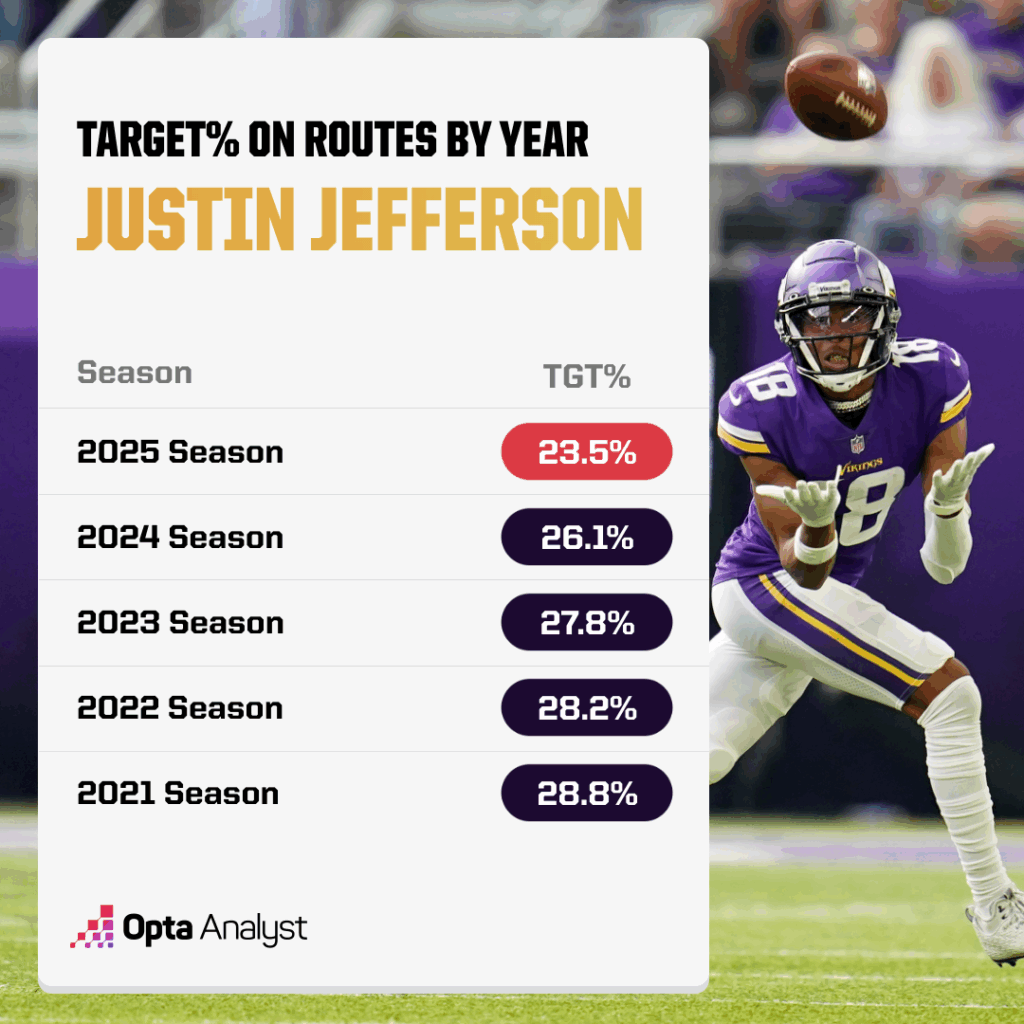
Jefferson’s targets are down slightly. He’s on pace for about 142 targets in 2025 after ending up with 154 last season. His targets per route run are also down a bit over the last couple of seasons after routinely falling in the 27-28% range with Cousins under center.

And with deep-threat Jordan Addison in and out of the lineup due to injury, Jefferson is facing more double coverage than anyone in the NFL. He’s gone up against those looks on about 24% of his “read” routes, which is far ahead of the next-highest rate – Rome Odunze of the Chicago Bears at 19.7%.
But it’s also less than the 25.2% of his read routes he was facing double coverage on last season. A read route is how often an eligible receiver is “read” by the quarterback. Basically, when a player is running a route, is the quarterback paying them any attention?
Still, there’s a difference between just reading or targeting a receiver and throwing him the ball when he’s actually open. McCarthy’s 72.7% open target rate is the fourth worst in the league among those with at least 175 adjusted attempts (no spikes or takeaways) heading into Week 16.
Perhaps it’s a combination of trying to get Jefferson involved and the number of times he’s been doubled up, but McCarthy has clearly attempted to force-feed his superstar WR at times. In fact, Jefferson’s 64.2% open rate ranks 47th (or 15th worst) in the league among the 62 receivers with at least 50 targets.
Open rate measures how often a pass catcher is open on throws in which he’s the targeted receiver. So Jefferson’s low rate can mean either he’s getting open less, the QB is force-feeding him the ball, and/or he’s the type of player who is elite at catching 50-50 balls, making him “open” even when he’s not really open.
But of the bottom 15 WRs in open percentage, Jefferson is also tied for the fewest touchdown burns (two), has the fewest burn yards per target (9.09), and owns the fourth-worst burn percentage (51.4) and big-play percentage (26.0). Big-play percentage is a weighted formula that shows how often a receiver generates “big plays” (burns of at least 20 yards or TD burns).
A burn is when a receiver “wins” (determined by a formula based on game info and how far downfield the pass is thrown) his matchup against a defender on a play in which he’s targeted, regardless of whether the pass from the quarterback was catchable or not. So it’s an important data point to look at here, as it takes quarterback performance out of the equation.
The reality is that Jefferson has never been what you’d call a data darling. He’s put up some superstar numbers despite some very pedestrian advanced statistics.
His burn percentage has been rated above average since entering the league in 2020, though only slightly in more recent years, while his burn yards per target, big-play percentage and catch rating have been above average but not elite.

In 2025, however, Jefferson has had an eye-opening collapse in several categories. He’s on pace to have career lows in burn rate, burn yards per target, open rate and big-play percentage.
All four marks are also well below the 2025 NFL average for burn rate (58.2%), burn yards per target (10.49), open rate (70.0%) and big-play percentage (29.3%). A look at the data alone would lead one to believe this is a depth piece in a WR room, not a four-time Pro Bowl pick.
Jefferson’s route rating, which measures a receiver’s ability to win routes, is at a respectable 80.9 – right where it was last season. A player with a rating of 80 is right on the border between average (70-80) and really good (80-90).
And his .910 catch rating, which is a score from 0-1 that indicates how well a receiver successfully catches throws that are considered catchable, remains above average so far this season. Though in the second half on Sunday, he had a McCarthy throw go right through his hands in the back of the end zone.
Jefferson also had a ball bounce off his chest in tight coverage, while McCarthy overthrew a pass to him when he was open in the third quarter. The connection, rapport, chemistry – whatever you want to call it – just isn’t there.
Again, it’s easy to blame McCarthy, who is in his first full season after missing last season with a torn meniscus in his right knee. However, the Michigan product has played some of his best football in the last two weeks, completing 66.0% of his passes for 413 yards with five touchdowns and one interception.
And still, Jefferson totaled just four receptions for 33 yards in the back-to-back victories over the Washington Commanders and Dallas Cowboys.
Sure, some of Jefferson’s fall has been due to what has been at times a messy QB situation. But the tremendous drop in some of the underlying data also points to Jefferson himself performing well below even average expectations.
For more coverage, follow along on social media on Instagram, Bluesky, Facebook and X.
The post Falling Star: How Much is Justin Jefferson to Blame for His “Difficult” 2025 Season? appeared first on Opta Analyst.
CHECK OUT THE HOTTEST DEALS ON AMAZON!
PSA Football Graded Card Mystery Pack | PSA Graded Football Card + 1 Sealed Pack of Cards | Grade 8+ Guaranteed | Contains One Graded Vintage, Rookie, Legend or Current Star | by Zoo Packs
$39.95 (as of January 15, 2026 14:52 GMT +00:00 - More infoProduct prices and availability are accurate as of the date/time indicated and are subject to change. Any price and availability information displayed on [relevant Amazon Site(s), as applicable] at the time of purchase will apply to the purchase of this product.)
2025 Topps Baseball Complete 705 Card Factory Sealed HOBBY Factory Set with (5) EXCLUSIVE FOILBOARDS #/417! Includes all Series 1 + 2 Cards Including Shohei Ohtani, Aaron Judge Bobby Witt Jr & More!
$99.95 (as of January 15, 2026 14:52 GMT +00:00 - More infoProduct prices and availability are accurate as of the date/time indicated and are subject to change. Any price and availability information displayed on [relevant Amazon Site(s), as applicable] at the time of purchase will apply to the purchase of this product.)
2024 Topps Chrome Football Value Box
$49.89 (as of January 15, 2026 14:52 GMT +00:00 - More infoProduct prices and availability are accurate as of the date/time indicated and are subject to change. Any price and availability information displayed on [relevant Amazon Site(s), as applicable] at the time of purchase will apply to the purchase of this product.)
2024 Topps Resurgence Football Trading Card Value Box - Look for Exclusives
$29.99 (as of January 15, 2026 14:52 GMT +00:00 - More infoProduct prices and availability are accurate as of the date/time indicated and are subject to change. Any price and availability information displayed on [relevant Amazon Site(s), as applicable] at the time of purchase will apply to the purchase of this product.)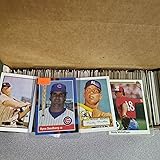
Topps, Upper deck, Donruss, Fleer, Score, Upperdeck 600 Baseball Cards Including Babe Ruth, Unopened Packs, Many Stars, and Hall-of-Famers. Ships in White Box Perfect for Gift Giving.
$21.25 (as of January 15, 2026 14:52 GMT +00:00 - More infoProduct prices and availability are accurate as of the date/time indicated and are subject to change. Any price and availability information displayed on [relevant Amazon Site(s), as applicable] at the time of purchase will apply to the purchase of this product.)
Bill Skarsgard Pennywise the Dancing Clown #1746 Facsimile Signed Reprint Laser Autographed Funko POP! Movies IT Welcome To Derry Figurine with Protector Case
(as of January 15, 2026 14:47 GMT +00:00 - More infoProduct prices and availability are accurate as of the date/time indicated and are subject to change. Any price and availability information displayed on [relevant Amazon Site(s), as applicable] at the time of purchase will apply to the purchase of this product.)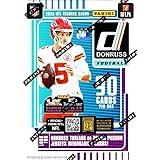
2025 Panini Donruss Football Blaster Box of Packs Try For Jaxson Dart, Cam Ward, Travis Hunter, Ashton Jeanty and Other Rookie Cards Plus Rookie Memorabilia, Autographs and WHITE HOT Rookies Inserts
$59.99 (as of January 15, 2026 14:47 GMT +00:00 - More infoProduct prices and availability are accurate as of the date/time indicated and are subject to change. Any price and availability information displayed on [relevant Amazon Site(s), as applicable] at the time of purchase will apply to the purchase of this product.)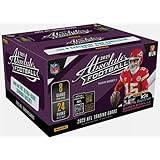
NEW 2025 ABSOLUTE Football Card HUGE Retail Box with 192 Cards, Chance for Ultra Rare KABOOM Inserts!
(as of January 15, 2026 14:47 GMT +00:00 - More infoProduct prices and availability are accurate as of the date/time indicated and are subject to change. Any price and availability information displayed on [relevant Amazon Site(s), as applicable] at the time of purchase will apply to the purchase of this product.)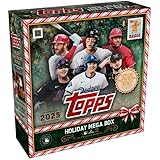
2025 Topps Holiday Baseball Trading Card Factory Sealed Mega Box
$49.99 (as of January 15, 2026 14:47 GMT +00:00 - More infoProduct prices and availability are accurate as of the date/time indicated and are subject to change. Any price and availability information displayed on [relevant Amazon Site(s), as applicable] at the time of purchase will apply to the purchase of this product.)












Post Comment