


How Griffin Canning Quietly Transformed the Mets’ 2025 Season Against All Odds
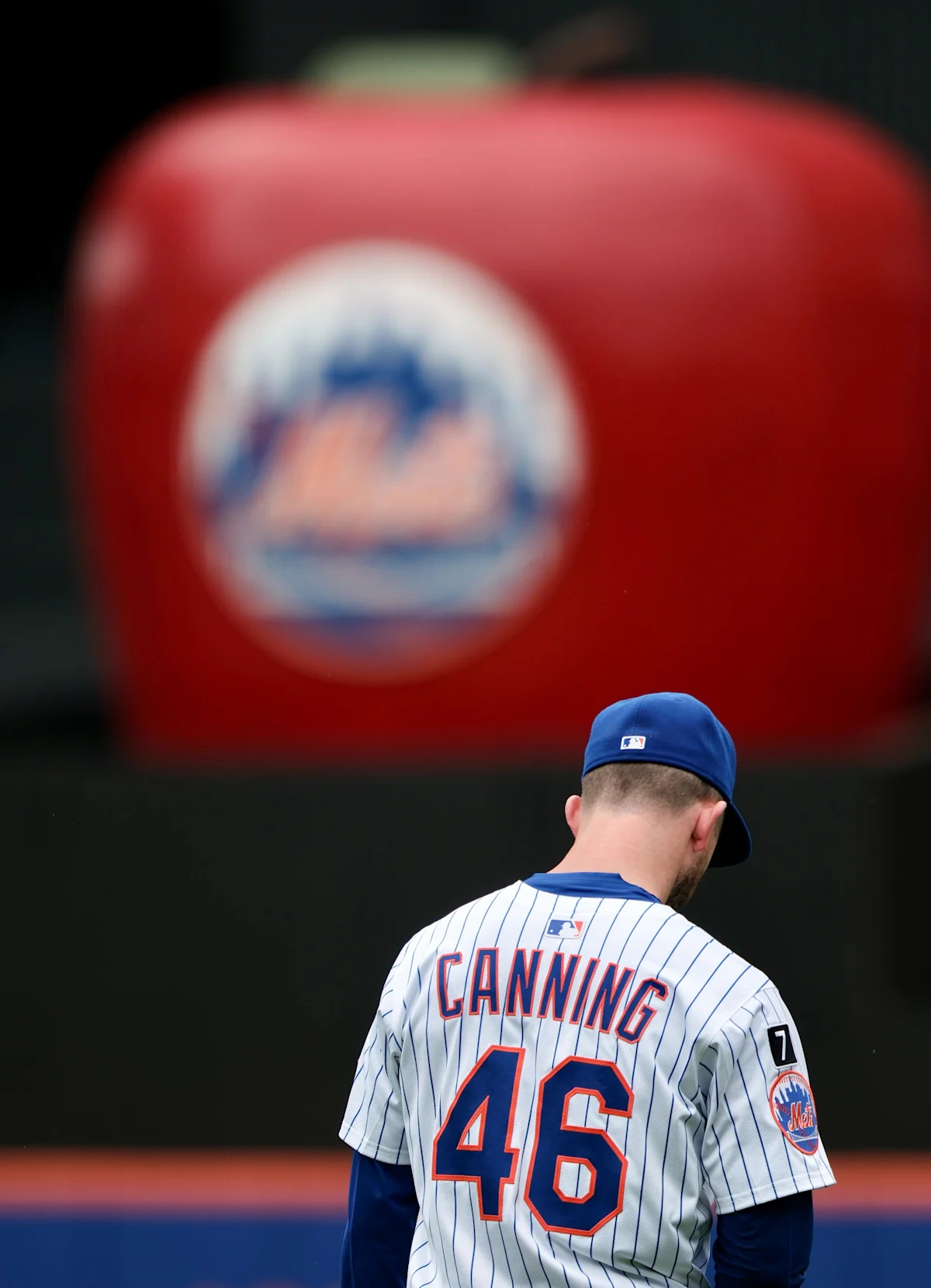
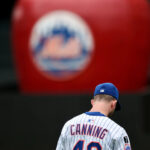
After the Mets barely missed the playoffs last season, the usual flood of “what if” questions started swirling around in every corner of the baseball world. But—and this might surprise some—the one nagging question that keeps echoing louder than most is: what if Griffin Canning hadn’t torn his Achilles? It almost feels strange to say out loud, considering no one expected Canning to be such a pivotal player when the Mets inked him last offseason for a modest one-year, $4.25 million contract.
Canning’s journey to the Mets’ rotation was hardly straightforward. After leading the league in earned runs in 2024, shuffling from the Angels to the Braves (only to be non-tendered), he landed a spot thanks to injuries sidelining Sean Manaea and Frankie Montas. Spring training showcased a different Canning altogether—heck, his 1.88 ERA and 22 strikeouts over just 14 1/3 innings looked downright electric, especially when you consider it was way above his usual standards and topped anyone else on the Mets during Grapefruit League play. Back then, I noted the Mets had fine-tuned his pitching arsenal — adding that two-seam sinker and resurrecting the cutter he once threw to give lefty hitters a headache. His changeup already ranked among the top twenty in run value last year, and with a few sequencing tweaks, the results in spring training suggested he could be a secret weapon. Someone you’d quietly count on to help navigate the inevitable grind and injuries of a 162-game season.
And that’s exactly what happened… for a while. Canning proved to be a dependable David Stearns success story—not flashy, but effective. Through his first nine starts, he posted a tidy 2.47 ERA, riding the wave of that nasty changeup, which hitters batted barely .188 against, and a hefty ground ball rate of 55.2%. Sure, the advanced metrics like SIERA and FIP weren’t exactly his biggest fans due to the frequent contact, but the Mets got what they really needed: a pitcher who could hold the fort.
But then May and June arrived, and with them, a bit of bad luck. His ERA ballooned to 5.50 over 34 1/3 innings, walks piled up, and when he went down on June 26 after a non-contact injury, the news was devastating—a ruptured Achilles. Surgery and the rest of the season lost. For both Canning and the Mets, it was a hard pill to swallow. This was a guy on the rise, possibly looking at a multi-year deal. As it stands now, he’s still a free agent, attracting interest, but with that injury looming large, a richer contract next season feels like a long shot.
Despite the setback, Canning’s stint with the Mets—ending with a solid 3.77 ERA and 107 ERA+ in just 16 starts—was a bargain from the start. Yet, it sparks that stubborn “what if” again: had he stayed healthy and maintained his first-half form, could he have been the extra edge to nudge the Mets over the playoff line? In that alternate reality, Canning’s resurgence and Clay Holmes finding a home in the rotation would be hailed as savvy moves by David Stearns, fueling optimism for 2026.
Instead, we’re left with the reality of questionable signings, injury uncertainties, and a patchwork rotation—though the Freddy Peralta trade brought some sunshine amid the clouds. Still, Canning’s brief 2025 snapshot offers hope. He did enough to prove he’s not a fluke, despite warning signs of regression. Whether the Mets bring him back—or if another team rolls the dice—remains an open question, especially unless there’s a shakeup in the Mets’ current starting staff.

After a season where the Mets missed the playoffs by as narrow a margin as they did, “what if” questions inevitably abound in the post mortem analysis. Of all of those “what if” questions, one that looms surprisingly large is, “What if Griffin Canning hadn’t ruptured his Achilles?” It feels strange typing those words because when the Mets signed Canning to a one-year, $4.25 million deal last offseason, no one envisioned he would play as large of a role on the team as he did.
After leading the league in earned runs in 2024 and getting traded by the Angels and then non-tendered by the Braves, Canning found himself with a job in the Mets’ rotation to begin the season because of injuries to Sean Manaea and Frankie Montas. Canning looked like an entirely different pitcher in spring training, posting a 1.88 ERA and striking out 22 batters in 14 1/3 innings—a far higher rate than his career norms and a higher rate than anyone else on the team in Grapefruit League action. At the time when Canning was in the running for the 2025 King of Spring Training contest, I wrote:
The Mets have refined Canning’s pitch mix, adding a two-seam sinker and bringing back a cutter he used to throw to serve as a weapon against lefties. Canning’s changeup ranked in the top 20 in run value among starters last season and the Mets hope that some tweaks in sequencing can improve his results. The results in spring training speak for themselves. Hopefully Canning is another David Stearns success story: not a sexy acquisition, but one that will help the Mets weather a 162-game season with inevitable pitching injuries.
A David Stearns success story is exactly what Canning turned out to be. Though he didn’t maintain quite the prolific strikeout rate of his small spring sample size, Canning did maintain his momentum overall to begin the season, putting up a 2.47 ERA through his first nine starts. He did that mostly on the back of that changeup, which hitters batted just .188 against in 2025, and via a 55.2% ground ball rate over those first nine starts. Metrics like SIERA, FIP, and xERA are less kind to Canning’s impressive start because of the amount of contact he gave up, but he gave the Mets exactly what they needed from him: the ability to weather the storm.
Advertisement
Canning’s early luck caught up with him a bit in the second half of May and into June, over which he put up a 5.50 ERA in 34 1/3 innings, seeing his walk rate spike. Canning never got the chance to right the ship. On June 26, he suffered a non-contact injury, crumpling to the ground after stepping off the mound. It didn’t look good at the time and eventually testing confirmed the worst: a ruptured Achilles tendon that would require surgery and cost him the rest of the season.
It was truly a shame for both the Mets and for Canning. Canning lost out on the chance to parlay what was shaping up to be a renaissance season into a possible multi-year deal. As of this writing, Canning is still a free agent, though he has drawn interest from multiple teams, including the Mets. However, given the injury, the chances that Canning’s next contract is richer than the one earned in 2025 are slim. Meanwhile, the Mets lost what turned out to be, on balance, an above average starting pitcher from their rotation. All told, Canning ended up with a 3.77 ERA and a 107 ERA+ in 76 1/3 innings across 16 starts. Given the amount the Mets signed Canning for and the expectations of him entering the season, even this injury-shortened campaign was absolutely a bargain. But when one looks at what happened to the Mets from June 26 onward, the “what if” question inevitably creeps in. The starting rotation was the chief area of the team that failed down the stretch. Because of injuries and ineffectiveness, the Mets were forced to rely upon their young arms to mixed success. One can’t help but wonder if Canning simply xeroxing his first half output in the second half would have been enough to eke out that one extra win the Mets needed to make the playoffs in 2025. In that alternate universe, the resurgence of Griffin Canning and the successful transition of Clay Holmes to the starting rotation are heralded as victories by David Stearns and the Mets’ pitching apparatus that inspire confidence for 2026.
C’est la vie. Instead, we live in a universe where the outcome of the Frankie Montas signing and uncertainty surrounding Sean Manaea and Kodai Senga leave some lingering apprehension, despite the morale boost that was the Freddy Peralta trade. However, Canning’s story—injury-shortened or not—is reason for optimism; it is likely he did enough in 2025 to be given a chance by someone to prove it was not a fluke, despite the warning signs of regression. But it is unlikely that team will be the Mets unless a trade that subtracts from the current group of big league starters is still in the works.
CHECK OUT THE HOTTEST DEALS ON AMAZON!
2025 2026 Upper Deck M V P Hockey Series Unopened Blaster Box of 11 Packs with Chance for Rookies Plus #1 Draft Picks Cards and Blaster Exclusive Gold Scripts
$34.99 (as of January 31, 2026 15:04 GMT +00:00 - More infoProduct prices and availability are accurate as of the date/time indicated and are subject to change. Any price and availability information displayed on [relevant Amazon Site(s), as applicable] at the time of purchase will apply to the purchase of this product.)
100 Vintage Football Cards in Old Sealed Wax Packs - Perfect for New Collectors
$15.75 (as of January 31, 2026 15:04 GMT +00:00 - More infoProduct prices and availability are accurate as of the date/time indicated and are subject to change. Any price and availability information displayed on [relevant Amazon Site(s), as applicable] at the time of purchase will apply to the purchase of this product.)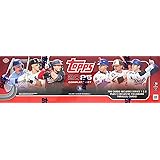
2025 Topps Baseball Complete 705 Card Factory Sealed HOBBY Factory Set with (5) EXCLUSIVE FOILBOARDS #/417! Includes all Series 1 + 2 Cards Including Shohei Ohtani, Aaron Judge Bobby Witt Jr & More!
$99.95 (as of January 31, 2026 15:04 GMT +00:00 - More infoProduct prices and availability are accurate as of the date/time indicated and are subject to change. Any price and availability information displayed on [relevant Amazon Site(s), as applicable] at the time of purchase will apply to the purchase of this product.)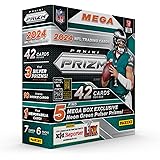
FB PRIZM (24-25) Mega Box
$79.60 (as of January 31, 2026 15:04 GMT +00:00 - More infoProduct prices and availability are accurate as of the date/time indicated and are subject to change. Any price and availability information displayed on [relevant Amazon Site(s), as applicable] at the time of purchase will apply to the purchase of this product.)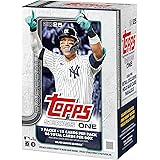
2025 Topps Series 1 Baseball - Factory Sealed - Value Box
$49.00 (as of January 31, 2026 15:04 GMT +00:00 - More infoProduct prices and availability are accurate as of the date/time indicated and are subject to change. Any price and availability information displayed on [relevant Amazon Site(s), as applicable] at the time of purchase will apply to the purchase of this product.)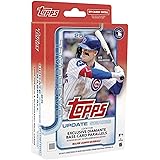
2025 Topps Update Series Baseball Hanger Trading Card Box (Find Hanger Exclusive Diamante Parallels!)
$22.99 (as of January 31, 2026 15:06 GMT +00:00 - More infoProduct prices and availability are accurate as of the date/time indicated and are subject to change. Any price and availability information displayed on [relevant Amazon Site(s), as applicable] at the time of purchase will apply to the purchase of this product.)
2025 Topps Baseball Flagship Collection Series 2 Trading Card Box (1 Oversized Card Per Box)
$59.89 (as of January 31, 2026 15:06 GMT +00:00 - More infoProduct prices and availability are accurate as of the date/time indicated and are subject to change. Any price and availability information displayed on [relevant Amazon Site(s), as applicable] at the time of purchase will apply to the purchase of this product.)
High Cheese Baseball Walk Off Mystery Pack - 2 Cards, 1 PSA Graded & 1 Autograph/Relic Ungraded
$39.99 (as of January 31, 2026 15:04 GMT +00:00 - More infoProduct prices and availability are accurate as of the date/time indicated and are subject to change. Any price and availability information displayed on [relevant Amazon Site(s), as applicable] at the time of purchase will apply to the purchase of this product.)
2025-26 Topps NBA Basketball Flagship Collection Trading Card Box (1 Oversized Card Per Box)
$64.40 (as of January 31, 2026 15:04 GMT +00:00 - More infoProduct prices and availability are accurate as of the date/time indicated and are subject to change. Any price and availability information displayed on [relevant Amazon Site(s), as applicable] at the time of purchase will apply to the purchase of this product.)







Post Comment