





Unveiling the Mets’ Future Stars: Which Hidden Gems Will Dominate by 2026?
When you dive into the Mets’ farm system, it’s impossible not to get captivated by the surge of pitching talent bubbling just beneath the surface. Last season, no sleeper prospects caught my eye quite like Daniel Wenninger. Though his 2024 stats didn’t exactly scream dominance, I pegged him as a dark horse, ranking him 20th on my personal prospect list for 2025—his pinpoint control and knockout strikeout potential made him stand out. Then 2025 arrived, and Wenninger didn’t just maintain that level; he exploded onto the scene, refining his pitches notably, especially his slider and curveball. That kind of progression signals something beyond mere luck—it’s the product of real skill evolution. While I wouldn’t rush to say he’s on the same plane as Nolan McLean or Jonah Tong just yet, Wenninger’s ability to match their dominance in the minors suggests he could vastly outpace expectations once he finally steps foot on a major league mound. The thought alone gets me intrigued about what the Mets have tucked away in their pitching arsenal going forward.
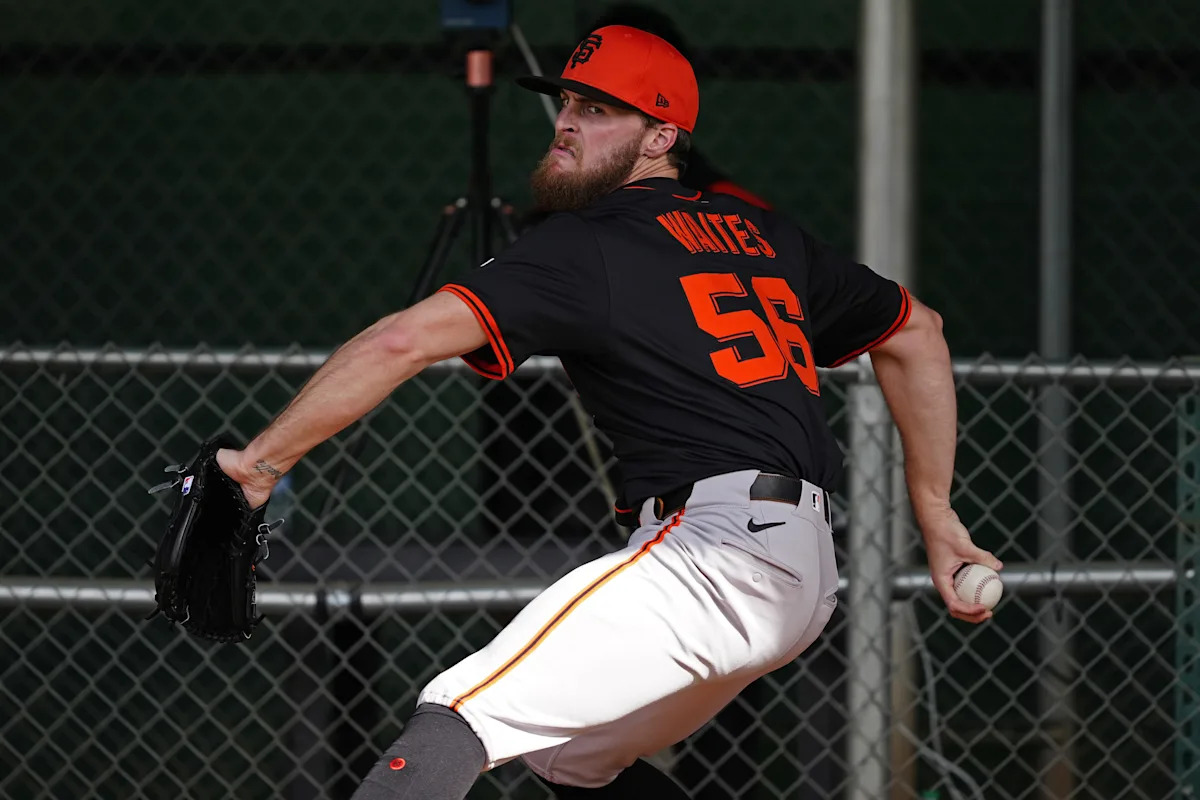
Wenninger’s journey isn’t an isolated success story either. The Mets’ pitching development machine keeps cranking out talent no matter what. Take Will Watson for example—once a mid-90s fastball guy with a slider, someone easy to overlook. Turns out, he wasn’t just another name. With improvements in velocity and a polished four-pitch mix—including a new changeup—he’s now commanding attention as a top-100 prospect. The minor league system is bursting with arms like his, raising hopes that the Mets might finally have the depth to avoid scrambling for bullpen scraps and even leverage trades to build their core without gutting their future locks. It’s a thrilling time for insider watchers like me who appreciate the nuts and bolts behind player development.
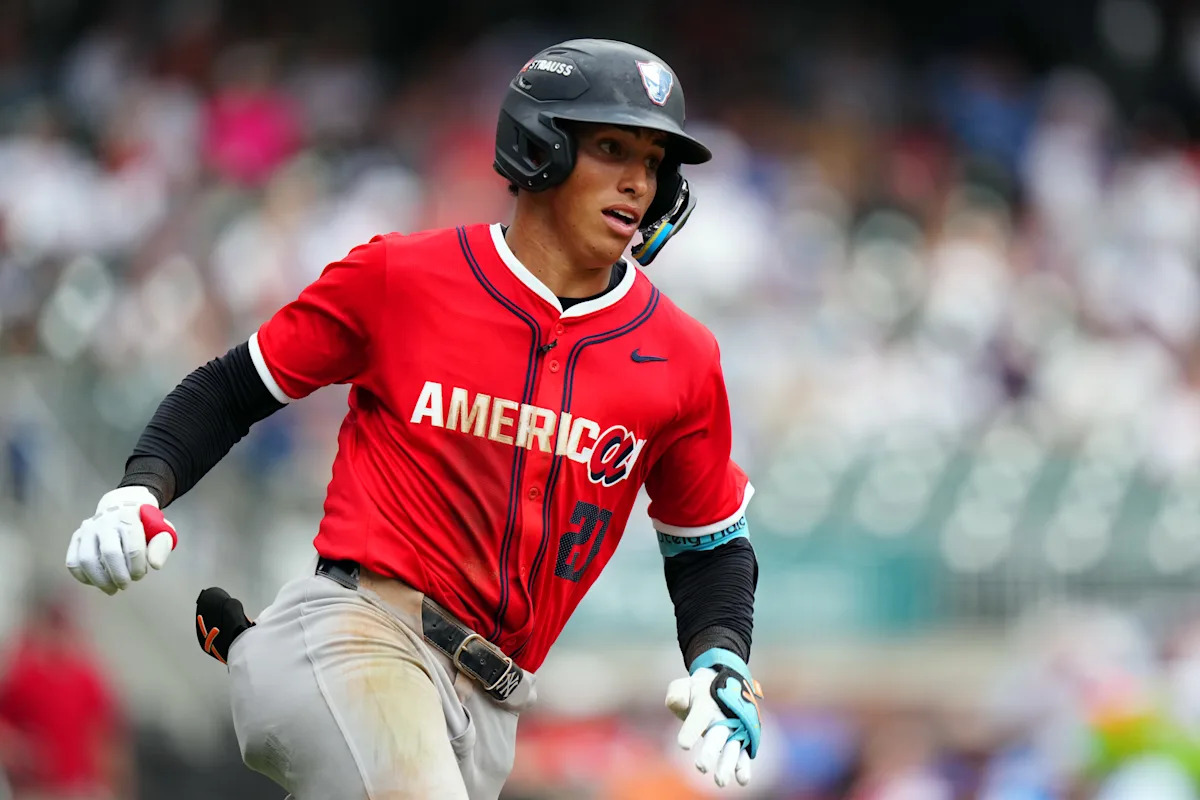
On the offensive front, prospects like Ryan Clifford and Jacob Reimer are navigating the challenging path of proving consistency and versatility. Clifford’s power has flashes of brilliance but is accompanied by the usual growing pains of strikeouts and hit-tool questions. Meanwhile, Reimer’s bat looks legitimate, but his defensive limitations leave us wondering about where he eventually fits on the diamond. Then there’s A.J. Ewing, quietly carving out a reputation as a disciplined hitter with elite speed, someone who could easily climb the ranks quietly yet convincingly.
I can’t discuss this wave of talent without mentioning brands like Brandon Sproat and Jett Williams, both of whom have counseled patience amidst injury setbacks and the grind of honing their craft. Meanwhile, Jonah Tong’s journey, despite a rocky MLB debut, showcases the gritty resilience and refinement needed to make it as a front-line starter.
What ties all of these narratives together is the Mets’ ability to nurture raw potential into tangible, often exciting major league-ready talent. Whether it’s through overhauling mechanics, refining pitch arsenals, or redefining player roles, the organization is proving it can develop players who might not have screamed “future star” at the moment of their draft. For a franchise perpetually chasing greatness, this rising tide of prospects offers genuine optimism and a fascinating glimpse at the future that awaits Queens.

We didn’t do sleeper prospects or anything like that last season, but Wenninger would have been mine. Even though his 2024 season was so-so, I ranked him 20th on my 2025 personal list based on the power of his control and strikeout stuff. This past season Wenninger continued showing that control and strikeout stuff, but the results were there and he rocketed up the cumulative list. The fact that the improvements were seemingly based on pitch refinement, particularly his slider and curveball, is encouraging, because it shows that his success was real and sustainable and not just based on random luck. I am not going to be as bold as to say that Wenninger has as much front-line starter potential as Nolan McLean or Jonah Tong do, but the right-hander has kept pace with those two in terms of statistical domination and I would not at all be surprised if he performs at an order of magnitude higher than what most are expecting when he makes his eventual MLB debut sometime soon.
The Mets’ pitching development apparatus is unstoppable. Wenninger was a 6th round pick out of Illinois who never posted an ERA under 4.50 in college. Two years later, he’s dominating Double-A with an ERA under three. He’s throwing harder, has improved breaking ball shape, added a good splitter – basically the Mets (and Wenninger, who deserves a great deal of credit as well) managed to pull every single development lever simultaneously here. The upside here is still probably more like #4 starter rather someone w/ top-of-the-rotation potential, but it’s an extraordinary win, and he’ll be in the picture if and when the Mets need arms at some point in 2026 (and beyond).
A year ago, I was skeptical of Will Watson, comparing him to Trey Cobb and Cole Gordon as cautionary mid-90s-fastball-guys-with-a-slider tales if something in his profile didn’t pop. Well, Will Watson popped. He started throwing harder, added a cutter, improved his changeup, and now we’re cooking. I don’t remember exactly when it was, sometime in the summer, but I was watching a game and seeing Watson’s stuff and how his pitches were moving, it really wowed me. It’s one thing to read the data saying that his fastball is averaging 15 inches of induced vertical break or that his slider is averaging 2,500 RPM or that his changeup is producing an above-average 31 inches of vertical movement and 18 inches of arm-side movement and another to see live how those pitches are moving and how batters are reacting to those things. It is definitely hyperbole to say that the organization has another round of top-tier pitching prospects cooking in the minors, but I think there is enough depth emerging that the bargain bin might not need to be perused for middle relievers, or that potential substantial trades can be made in the future without feeling too much of a system-wide loss of talent.
The Mets’ pitching development apparatus is unstoppable. Watson was a 7th round pick whose most notable pre-draft resume item was 50.1 middling innings as a swingman at USC. Now he’s a top-100 prospect, with a very promising four-pitch mix, including a recently introduced changeup. I think there’s more relief risk here than with some of the other arms in this range (Wenninger being the most direct point of comparison), but we live in an era where multi-inning relief arms or low-inning starters are frequently leveraged and quite valuable. Maybe he’s a guy who makes it up as a multi-inning reliever / swing-man first and eventually shifts back to the rotation. Or his upward trajectory could continue and make that sort of worry look silly in 12 months time. Like the others before him, expect to see Watson at some point in 2026.
As much as he destroys baseballs, I can’t get on the Ryan Clifford train. I value him certainly, but big-time power hitters with suspect hit tools just don’t really do it for me; what good is 80-grade power (Clifford does not have 80-grade power, to be clear) if you have a 20-grade hit tool (Clifford does not have a 20-grade hit tool, either)? Even Adam Dunn, the modern-day archetype of the three-true-outcome player, was a .300+ hitter in his formative years in the minors. Clifford showed incremental improvements last year in certain areas as compared to his 2024 season, and he still is just barely able to legally drink, but he feels like the kind of player who will be maddeningly inconsistent and never fully live up to expectations. As we’ve seen in the past, he can go 2-27 with 2 home runs and 1 walk to 10 strikeouts one week (July 8-13), then go 12-31 with 2 doubles, 4 home runs, and 8 walks to 6 strikeouts the next week (July 22-27), and then go 5-23 with 1 double and 1 walk to 4 strikeouts the week after that (July 29-August 3). Game changing power doesn’t grow on trees, and while I’m not sure how much there is to realistically work on or optimize that isn’t going to fundamentally change Clifford as a player, he should be given every opportunity to develop and eventually fight for some kind of big league role.
It wasn’t the biggest breakout in the system by any means, but Ryan Clifford had an extremely successful 2025 that restored a lot of the faith we lost in 2024. If you looked only at his wRC+ in Double-A between the two seasons, you’d probably wonder what the hell I’m talking about (137 in 2024, 148 in 2025). The shape matters though, and Clifford improving the net production while reducing his strikeouts, swinging more frequently, and translating more of his good contact into homers are all moves in the right direction. We got a glimpse of how this looks in Triple-A at the end of the season as well, and while the total production was only average, all the key markers were very promising; 93rd percentile damage, 83rd percentile SEAGER (indicative of his less passive approach) and 66th percentile Z-contact. The Mets are telling you something by leaving Clifford a potential path to playing time at 1B/DH this season; he’s firmly back on the map as a potentially valuable long-term piece.
This past season, Jacob Reimer hit .279/.374/.479 in 61 games at Double-A Binghamton with 14 doubles, 1 triple, 9 home runs, 4 stolen bases in 5 attempts, and drew 26 walks to 60 strikeouts, good for a 150 wRC+. Back in 2004, another Binghamton third baseman hit .363/.467/.619 in 60 games with 27 doubles, 10 home runs, 20 stolen bases in 26 attempts, and drew 39 walks to 41 strikeouts, good for a 160-ish wRC+. David Wright was also a five-tool third baseman, whereas Reimer is lacking in the speed and defense departments, but it just goes to show that Reimer’s hit tool is legitimate and his power is indeed coming along. As long as he continues hitting, you live with the poor defense at third, but because the profile is so weird and so offensive-driven, it feels hard to really commit and say that Reimer is the future of the hot corner.
The second I get out, he finally has a healthy season and starts hitting for power like we’ve all been hoping he’d do since 2022. A swing change and a bump in in-zone swing rate really brought all the pieces together; Reimer maintained his overall strong approach while leveraging his bat speed more effectively, impacting the ball more out in front of the plate and getting more pull-side damage. He struggled briefly at Double-A, then decided to just not do that and finished the season with a 150 wRC+. There might be a 6 hit, 6 power bat with a good approach here. So why isn’t he higher? Well he can’t defend basically anywhere. He’s a non-viable 3B, probably doesn’t have the foot speed for the outfield, and would be a very short / small first baseman. The cold corner is where I’d guess he winds up, but that puts a lot more pressure on the bat. If he keeps hitting like this though, it really won’t matter.
Back in 2024, when A.J. Ewing hit 5 homers in 19 games with the FCL Mets, I was kind of blown away because that kind of power was unexpected. Earlier in the process, when the reports came out, I had to kind of tell myself, “Wow, this is coming out.” I had to think about it. And I was a little bit, somewhat, “Let’s find out about this. We really have to do a thorough investigation of this.” And lo and behold, Ewing really was hitting the ball hard. While the home run numbers have stagnated, he is averaging about a 90 MPH exit velocity since then, with multiple 100+ MPH readings and high-water marks around 110 MPH. He is going to need to activate some more of that power into doubles, triples, and homers in order to be a productive hitter going forward, but it’s not like he needs to magically revamp his entire game and become a slugger in order to have utility to the organization; far from it, with his hit-tool, great eye at the plate, strong swing decisions, elite speed, and more-than-capable center field defense, Ewing has an incredibly high floor, and the more power he can generate, the higher his ceiling becomes. There is some overhype risk in Ewing, but at 21-years-old this upcoming season, he is well ahead of the curve with plenty of time to put in the work.
It’s been less appreciated because of the breakouts from the first three names in the system, but A.J. Ewing actually had an incredible 2025. He came into the season with a totally revamped swing and immediately demonstrated high-end contact skills. Ewing also hits the ball harder than you’d think, though his spray angles – both vertically and horizontally – currently limit the over-the-fence pop. Couple those skills with a disciplined, appropriately-aggressive approach and elite speed that may make him a 7 in center and you have a prospect who, in my opinion, is pretty clearly the fourth best player in the system. Oh and he’s also still only 20 and finished the year with a successful run at Double-A. There’s a reason the Mets balked when the Brewers asked for him in the Freddy Peralta deal.
Ultimately, it doesn’t really matter much now since he was traded, but I think the concept of Brandon Sproat is better than Brandon Sproat. A big, strapping 6’2”, 215-pound lad that flirts with triple-digits, throws a decent slider, and has a solid changeup, what’s not to like? But then you look into Brandon Sproat, and there’s a lot of pretty problematic data in his pitch characteristics- and not just semi-problematic under certain conditions, I’m talking fundamentally problematic. His four-seam and two-seam fastballs are both highly flawed pitches, and that’s not good when you’re a power pitcher and you’re going to be throwing those two pitches in whatever ratio about 50% of the time. There’s definitely a pathway for Sproat to be a good starting pitcher- he obviously wouldn’t be ranked so highly if we didn’t think that potential was there- and I personally think that he has even more potential as a reliever, perhaps a high leverage reliever, but that’s for Milwaukee to decide now.
Brandon Sproat does a lot of things well. He throws pretty hard, he finally landed on a breaking ball shape that works, and the change is still a decent pitch. Put in terms of physical skills, you can say that he has good arm speed and feel for spin. However, this has never really all come together for him, in large part because his fastball shape is just too bad to be an effective offering. Even with the addition of a sinker last season – one that grades out better but still not great – I’m still not convinced he’s the type of arm who can make it through a lineup two or three times. If you couple that with the lack of development runway relative to other arms (Sproat is older and was selected as a senior out of a major college program, which would normally mean there’s less juice to squeeze) in the back of the top-10 and I think I’d actually prefer Sproat a good deal lower, even though he’s a totally justifiable top-100 prospect.
It’s not something that the Mets, or us as Mets fans need to deal with anymore, but Williams was definitely the victim of post-hype prospect fatigue. I have literally read people saying, seemingly without jest, “Jett isn’t any good.” I don’t have a crystal ball and don’t know what the future holds, so Williams may not actually end up being any good, but players solidly ranked by all of the major outlets and at the front of the second half of the Top 100 lists clearly must be well regarded to wind up there. I’ll put it like this: in 2026, his age 21 season, if A.J. Ewing hit .288/.390/.477 in 96 games with Double-A Binghamton with 10 homers, 32 stolen bases in 39 attempts, and drew 62 walks to 96 strikeouts, we might be hearing about how he might be the best prospect in minor league baseball. Ewing plays better defense, so it’s not an exact 1:1 comparison, but the point is that reports of Jett Williams prospect death are greatly exaggerated, which is why he, along with Brandon Sproat, were able to net the Mets a two-time all-star pitcher. As a fellow 5’7”-er (on a good day), I have watched his career with great interest and look forward to Milwaukee Brewers photo day during spring training, when Jett is invariably positioned between the 6’8” Trevor Megill and the 6’7” Jacob Misiorowski.
I don’t disagree that much with Jett’s ranking here (I had Ewing above him), but I still find myself pretty down on him as a prospect, and I don’t think it’s just prospect fatigue. I began voicing concerns about Jett’s hit tool ~2 years ago, and in that time he’s not really assuaged any of those worries. Sure, injuries have played a role and the strikeout rate has held steady in the low-20s, but that’s not because Williams is great at putting bat on ball, it’s because he just doesn’t swing. He ranked in the 6th percentile for hittable pitches taken, nuking his SEAGER down to 3.9 despite the aforementioned healthy walk and strikeout rates. Couple that with what is still just okay damage on contact and a tweenerish defensive profile and this is trending more towards “high quality bench bat” or “second division starter” rather than the sort of player we were extolling as the future of the team in 2023.
I will always be a sucker for overslot prep pitchers and Jonah Tong piqued my interest back in 2022. In 2024, Tong had a breakout season, but little did we know that he was just getting started. When he was called up at the end of 2025 after absolutely crushing it in Double-A, the results weren’t there, but honestly, none of that matters to me. What is more important to me is the dominance he showed over the course of the 2025 season, not a handful of games in September. His fastball? Plus. His changeup? Above-average. His slider? Above-average. His curveball? Average. Tong throws a four-pitch mix where everything is average of better. The Mets threw him into the fire in a last ditch effort to salvage the 2025 season, and while it did not work out, Tong has showed that not only does he have physical skill, but he has the mental acuity to work on what went wrong, figure things out, and address what held him back. While he is high on the depth chart, Tong should have some time early in the season to get acclimated to the MLB/Triple-A ball and work on adjusting his pattern of attack against wily veterans and players with MLB experience before finally getting the call to Queens once again.
Tong was not good in the majors, there’s really no other way to slice it. It wasn’t just the top-line results that were concerning either; major league hitters just did not chase his changeup, nor did they whiff as frequently on his fastball. This is a problem both of command (Tong’s is not exactly precise) and pitch mix; Tong simply doesn’t have a good glove-side / breaking ball option right now, and it’s hard to succeed without that in your arsenal in the bigs. Thankfully, Tong has two things working for him. First, his fastball and changeup are still just silly good pitches. Second, the Mets have done enough that he can start the season in Triple-A and have ample runway to make the necessary improvements. I’m still quite bullish and think there’s clear top-of-the-rotation upside, we’re just going to have to wait a little bit long for the 22-year-old Tong to get there.
On the heels of Kevin Parada and Alex Ramirez fizzling out because of some odd swing mechanics, I had a sinking feeling when Carson Benge’s name was called in the 2024 MLB Draft. Like those aforementioned two, Benge had some funk in his swing…except he didn’t! Around three months or so into the NCAA season, Benge eliminated some of the extra movement in his swing, and by the time he was drafted, it more or less resembled the swing that he is using currently. As highlighted by his numbers over the course of 2025, and his placement on this list, the outfielder clearly did not have any issues hitting the ball as a professional. Benge is about as well-rounded a player as one can be, with an above-average hit tool, average power, average speed, an above-average arm, and average defense. There are areas of improvement to be sure, such as the need to pull-and-lift more, or emerging platoon splits against lefties, but Benge looks to be the real deal and the best outfielder drafted and developed by the organization since Michael Conforto.
That two of the biggest 1st round coups of the decade – Benge and Trey Yesavage – were taken back-to-back in 2024 is a cool little oddity Yesavage’s postseason heroics have vaulted him ahead, but Benge isn’t far behind and will likely be a universal top-10 or top-20 prospect by the time the offseason is over. He made an absolute mockery of both Brooklyn and Binghamton in 2025, and the key performance metrics didn’t change all that much in Syracuse even though the top line was ugly (getting hit in the hand didn’t help either). Benge has about as ideal a combination of contact and power as you could hope for without setting cheats and pushing the sliders up to the max. He’s also likely to be a viable center field defender in the near term. That the Mets are giving him ample runway to win a starting job out of Spring Training tells you basically everything else you need to know; this is a potential 5-tool player who is ready now.
I was a Nolan McLean doubter last year, and he certainly proved me wrong. It’s not that I didn’t think that he could have success, but with him only having two highly above-averages pitches and- at the time- a lack of innings, I thought he would be a high leverage bullpen conversion candidate. It may be my own preconceived notions stemming from my doubt at this point last season, but even in the face of what he did last season, I don’t know how much of the magic he might capture in 2026. The history of Major League Baseball is littered with well-considered minor leaguers who impressed in their initial debuts and then never were able to recapture that kind of magic ever again. There have been plenty who did find their footing, of course, but there are enough chinks in the armor and little things here and there to dissuade the notion that he is not second only to Paul Skenes, as his 2025 sample size suggests, at the very least. That does not mean that I think McLean will be bad in 2026, or unrosterable, or anything like that, but a McLean that regresses to the numbers that Steamer or ZiPS think he will- an ERA in the high 3s, a strikeout per nine rate just south of 9 and a walk per nine rate hovering around 3.5- is a solid pitcher, but not exactly an “ace”. Projection systems like Steamer or ZiPS have a bit of a blind spots when it comes to certain things, newly promoted rookie players being one of them, so obviously Steamer and ZiPS should not to be taken as gospel, but I think we all do need to hit the breaks a little before we anoint McLean the next deGrom.
McLean, by all rights, is no longer really a prospect, but he technically missed the innings threshold by six outs so here we are. His electric MLB debut featured a 2.06 ERA backed by a 21.8% K-BB% and a 60.2% GB rate (he’ll surely benefit from improved infield defense). His fastball, slider, cutter, and sweeper all had 90th percentile or better quality metrics per Rob Orr’s app, and his slider wasn’t shabby either. You could project some eventual struggles against left-handed batters, but McLean has such innate feel for spin and has already evolved his arsenal so thoroughly that it’s reasonable to expect he figures that out in time. However you slice it, he’s the best or second-best pitching prospect in baseball alongside Trey Yesavage.
CHECK OUT THE HOTTEST DEALS ON AMAZON!

Zoo Packs NBA Basketball PSA Graded Card Mystery Power Pack - 1 PSA Graded Card with A Grade of 8, 9 or 10 + 2 Packs of Basketball Cards
$29.95 (as of February 10, 2026 15:12 GMT +00:00 - More infoProduct prices and availability are accurate as of the date/time indicated and are subject to change. Any price and availability information displayed on [relevant Amazon Site(s), as applicable] at the time of purchase will apply to the purchase of this product.)
2025 2026 Upper Deck Series One Hockey Unopened Blaster Box of Packs with a Young Guns Rookie Card, an OPC Glossy Card, an Encore Insert and Green Dazzler Card Plus
$29.99 (as of February 10, 2026 15:12 GMT +00:00 - More infoProduct prices and availability are accurate as of the date/time indicated and are subject to change. Any price and availability information displayed on [relevant Amazon Site(s), as applicable] at the time of purchase will apply to the purchase of this product.)
2025 Topps Chrome Marvel Studios BLASTER box (7 pks/bx)
$49.99 (as of February 10, 2026 15:18 GMT +00:00 - More infoProduct prices and availability are accurate as of the date/time indicated and are subject to change. Any price and availability information displayed on [relevant Amazon Site(s), as applicable] at the time of purchase will apply to the purchase of this product.)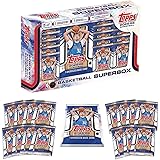
2025-26 Topps NBA Basketball Flagship Collection Trading Card Box (1 Oversized Card Per Box)
$66.75 (as of February 10, 2026 15:12 GMT +00:00 - More infoProduct prices and availability are accurate as of the date/time indicated and are subject to change. Any price and availability information displayed on [relevant Amazon Site(s), as applicable] at the time of purchase will apply to the purchase of this product.)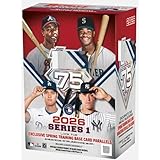
NEW 2026 Baseball Series 1 Trading Card Blaster Box - Look for Exclusive Spring Training Parallels
$59.95 (as of February 10, 2026 15:18 GMT +00:00 - More infoProduct prices and availability are accurate as of the date/time indicated and are subject to change. Any price and availability information displayed on [relevant Amazon Site(s), as applicable] at the time of purchase will apply to the purchase of this product.)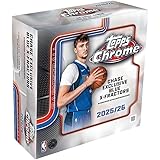
2025-26 Topps Chrome Basketball Mega Box
$149.98 (as of February 10, 2026 15:18 GMT +00:00 - More infoProduct prices and availability are accurate as of the date/time indicated and are subject to change. Any price and availability information displayed on [relevant Amazon Site(s), as applicable] at the time of purchase will apply to the purchase of this product.)
2024 Panini Donruss Elite NFL Football Trading Cards Blaster Box
$48.99 (as of February 10, 2026 15:12 GMT +00:00 - More infoProduct prices and availability are accurate as of the date/time indicated and are subject to change. Any price and availability information displayed on [relevant Amazon Site(s), as applicable] at the time of purchase will apply to the purchase of this product.)
2025 DONRUSS #278 SAM DARNOLD SEATTLE SEAHAWKS FOOTBALL OFFICIAL TRADING CARD OF NFL
$3.00 (as of February 10, 2026 15:18 GMT +00:00 - More infoProduct prices and availability are accurate as of the date/time indicated and are subject to change. Any price and availability information displayed on [relevant Amazon Site(s), as applicable] at the time of purchase will apply to the purchase of this product.)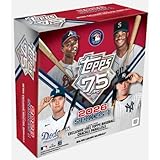
NEW 2026 Baseball Series 1 Trading Card MEGA Box - Look for Exclusive 1991 Topps Baseball Crackle Parallels
$109.95 (as of February 10, 2026 15:18 GMT +00:00 - More infoProduct prices and availability are accurate as of the date/time indicated and are subject to change. Any price and availability information displayed on [relevant Amazon Site(s), as applicable] at the time of purchase will apply to the purchase of this product.)










Post Comment