



Inside the Red Sox Collapse: The Shocking Truth Behind Alex Bregman’s Departure and the Team’s Unbelievable Excuse
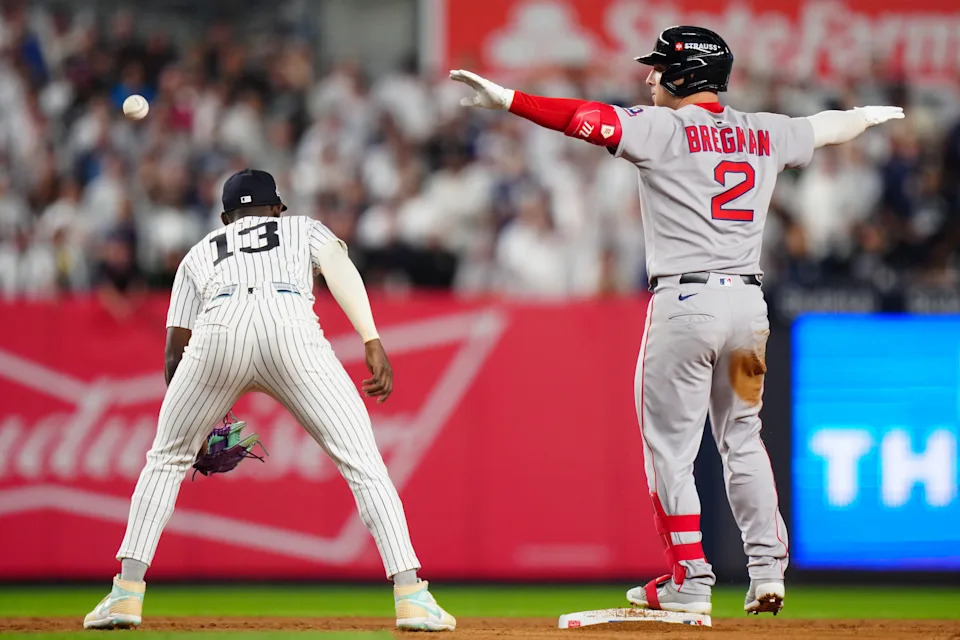
The Chicago Cubs just landed Alex Bregman with a jaw-dropping $175 million, five-year contract — and honestly, it’s hard not to feel the seismic shift this deal sends rippling through the baseball world. Meanwhile, across town in Boston, the Red Sox are grappling with what feels like an avalanche of missed opportunities, leadership gaps, and a daunting mess they now have to untangle. Bregman’s arrival in Chicago isn’t just a transaction; it’s a statement that could reshape the Cubs’ trajectory for years to come. For the Red Sox, though, this moment marks the culmination of a whirlwind off-season fraught with tough calls and, frankly, some fallout that’s left fans scratching their heads and demanding answers. This saga isn’t just about numbers— it’s about vision, commitment, and what teams are willing to do to win long-term. Dive into the full story to catch every twist and turn of this baseball drama.
The Chicago Cubs have Alex Bregman. Alex Bregman has 175 million bucks. And what do the Boston Red Sox have? A mountain of regret, a gargantuan leadership void and a whole lot of explaining to do.
Bregman’s $175 million deal with the Cubs, first reported by Michael Cerami of Bleacher Nation, will run for five years and features $70 million worth of deferred money. Notably, it includes a full no-trade clause but not opt-outs. That means Bregman, 32 years old in March, will be a Cub for at least the next half-decade.
Advertisement
It’s a significant investment for a player of that age, particularly one with recurring lower-body issues, but Bregman’s consistent offensive game, reliable third base glove and needle-moving clubhouse persona elevate the Cubs into a legitimate World Series contender. He makes Chicago a better baseball team moving forward; let’s gripe about “value” some other time.
For the Red Sox, who signed the longtime Houston Astro on an opt-out laden short-term pact last winter, this outcome is nothing short of an utter catastrophe. Bregman’s exit from Fenway Park represents a most embarrassing culmination to a most tumultuous year. Boston’s shocking decision to trade away franchise cornerstone Rafael Devers this past June was directly tied to Bregman’s presence at the hot corner.

Alex Bregman’s stint with the Red Sox was short-lived as it appears negotiations over a no-trade clause helped prompt him to seek employment elsewhere. (Photo by Daniel Shirey/MLB Photos via Getty Images)
(Daniel Shirey via Getty Images)
Had team owner John Henry and chief baseball officer Craig Breslow committed to Bregman long-term, then offloading Devers would have made some sense. Bregman’s one season at Fenway was an overwhelming success despite a two-month IL stint. Before the injury, he was tracking like a top-10 MVP candidate. The club’s gaggle of young players spoke endlessly about Bregman’s leadership qualities. His steadiness helped Boston overcome a drama-filled campaign to reach the playoffs, where the team was a win away from knocking off the Yankees.
Advertisement
[Get more Red Sox news: Boston team feed]
Little of that matters now. The Red Sox, with their unwavering fealty to reason, didn’t want to pony up. They are left with a rightfully enraged fan base, one left perplexed at how neither Devers nor Bregman are still around. Breslow attempted to placate the Red Sox faithful via an email Q&A with Mass Live’s Chris Cotillo on Sunday, but the executive’s jargony, calculated answers only reinforced the criticism that he runs the club with a ruthless, robotic, un-human efficiency.
But even the toxically-optimistic, long-viewed Breslow readily admitted that the outcome of the Bregman-Devers saga was suboptimal.
He typed out to Cotillo: “Neither outcome we face right now is ideal, but both will be evaluated over a longer time horizon.”
Advertisement
The rest of the interview is mostly hollow GM-speak, but there are also moments of unintentional honesty that amplify concerns about Breslow’s way of doing business. In regards to what motivated Bregman to choose Chicago’s offer, Boston’s top baseball exec expressed that “It would be foolish and unfair for me to guess what was most important in their decision making.”
One might argue that rather than being “foolish and unfair” it would be prudent and essential to understand the factors influencing Bregman’s “decision making.” Being unwilling to include a no-trade clause in the contract, for instance, seems to have been a major sticking point for Bregman and his agent Scott Boras. After two straight winters wading through free agency’s messy waters, Bregman wanted stability. He wanted somewhere he could put down roots for his family, buy a house, be a part of a community as he was in Houston. Everybody in New England knew as much.
Bregman’s desire for a no-trade clause was even more reasonable given the shadow of Devers’ departure only seven months prior. If the Sox were willing to change course and send somebody of Devers’ stature out of town, why would they hesitate to do the same to Bregman? Via additional Mass Live reporting, the team pointed to “organizational policy” in regards to their refusal to grant Bregman a no-trade. But in the end, that calculating inflexibility proved to be a miscalculation.
The whole thing is a public-relations disasterclass, a textbook example of how to not interface with your fan base. Whether the Red Sox don’t know this or simply don’t care is unclear. The majesty of Fenway Park (and the surrounding real-estate holdings) ensure that the team will print money whether or not the on-field product succeeds. It’s a savvy way for Fenway Sports Group to operate. It’s also cutthroat, insulting and short-sighted.
Advertisement
And in the end, all will be well if the team wins. The 2026 Red Sox remain a talented bunch. Garrett Crochet is a top-four pitcher on Earth. Roman Anthony is a volcano of talent. The additions of Sonny Gray and Willson Contreras are legitimately impactful. Positionally, the roster is a puzzle of border pieces, a disjointed assortment of good players that a trade or two could help simplify.
Still, Boston could overcome that dynamic to win 95 games and make a deep October run. If that happens, fans will pack Fenway to the gills and champion Breslow’s commitment to the process. Success, as always, heals everything.

But with Bregman out the door, it’s hard to say the Red Sox are better right now than they were a few months ago, when their season ended in pinstriped disappointment. It’s a reality that might have been avoided, whether with a couple more millions or a couple more human conversations.
Either way, the result is the same: Red Sox leadership looks bad, with a long to-do list that includes explaining how this happened to an irate fan base.
CHECK OUT THE HOTTEST DEALS ON AMAZON!

2025 Panini Mosaic Football Trading Cards Hanger Box
$38.00 (as of January 13, 2026 14:46 GMT +00:00 - More infoProduct prices and availability are accurate as of the date/time indicated and are subject to change. Any price and availability information displayed on [relevant Amazon Site(s), as applicable] at the time of purchase will apply to the purchase of this product.)
2025 Topps Baseball Complete 705 Card Factory Sealed HOBBY Factory Set with (5) EXCLUSIVE FOILBOARDS #/417! Includes all Series 1 + 2 Cards Including Shohei Ohtani, Aaron Judge Bobby Witt Jr & More!
$99.95 (as of January 13, 2026 14:47 GMT +00:00 - More infoProduct prices and availability are accurate as of the date/time indicated and are subject to change. Any price and availability information displayed on [relevant Amazon Site(s), as applicable] at the time of purchase will apply to the purchase of this product.)
NEW 2025 ABSOLUTE Football Card HOBBY BLASTER Box, Chance for KABOOMs! - 2 Rookie Purple Parallels Per Box
(as of January 13, 2026 14:46 GMT +00:00 - More infoProduct prices and availability are accurate as of the date/time indicated and are subject to change. Any price and availability information displayed on [relevant Amazon Site(s), as applicable] at the time of purchase will apply to the purchase of this product.)
2025 Topps Chrome Update Baseball Sealed Blaster Value Box (Look For Sepia Parallels)
$47.00 (as of January 13, 2026 14:46 GMT +00:00 - More infoProduct prices and availability are accurate as of the date/time indicated and are subject to change. Any price and availability information displayed on [relevant Amazon Site(s), as applicable] at the time of purchase will apply to the purchase of this product.)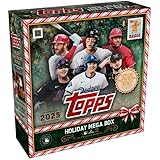
2025 Topps Holiday Baseball Trading Card Factory Sealed Mega Box
$49.99 (as of January 13, 2026 14:46 GMT +00:00 - More infoProduct prices and availability are accurate as of the date/time indicated and are subject to change. Any price and availability information displayed on [relevant Amazon Site(s), as applicable] at the time of purchase will apply to the purchase of this product.)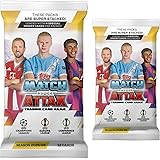
Grandor Soccer Trading Card Bundle – Topps Match Attax 2025/26 Season, 1 Pack of 12 Cards + 1 Promotional 5-Card Pack, Factory-Sealed,
$9.90 (as of January 13, 2026 14:46 GMT +00:00 - More infoProduct prices and availability are accurate as of the date/time indicated and are subject to change. Any price and availability information displayed on [relevant Amazon Site(s), as applicable] at the time of purchase will apply to the purchase of this product.)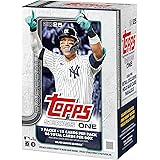
2025 Topps Series 1 Baseball - Factory Sealed - Value Box
$42.85 (as of January 13, 2026 14:47 GMT +00:00 - More infoProduct prices and availability are accurate as of the date/time indicated and are subject to change. Any price and availability information displayed on [relevant Amazon Site(s), as applicable] at the time of purchase will apply to the purchase of this product.)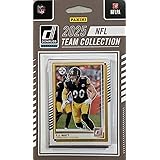
Pittsburgh Steelers 2025 Donruss Factory Sealed 12 Card Team Set Featuring Freiermuth, Watt and Bradshaw with Will Howard, Kaleb Johnson, Jack Sawyer and Derrick Harmon Rated Rated Rookie Cards Plus
$14.95 (as of January 13, 2026 14:46 GMT +00:00 - More infoProduct prices and availability are accurate as of the date/time indicated and are subject to change. Any price and availability information displayed on [relevant Amazon Site(s), as applicable] at the time of purchase will apply to the purchase of this product.)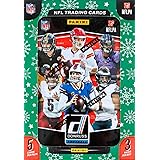
2025 Panini Donruss Football Trading Cards Tin
$13.99 (as of January 13, 2026 14:47 GMT +00:00 - More infoProduct prices and availability are accurate as of the date/time indicated and are subject to change. Any price and availability information displayed on [relevant Amazon Site(s), as applicable] at the time of purchase will apply to the purchase of this product.)










Post Comment