







Kylian Mbappe’s 2026 World Cup Quest: Which Dark Horse Could Shatter France’s Crown?
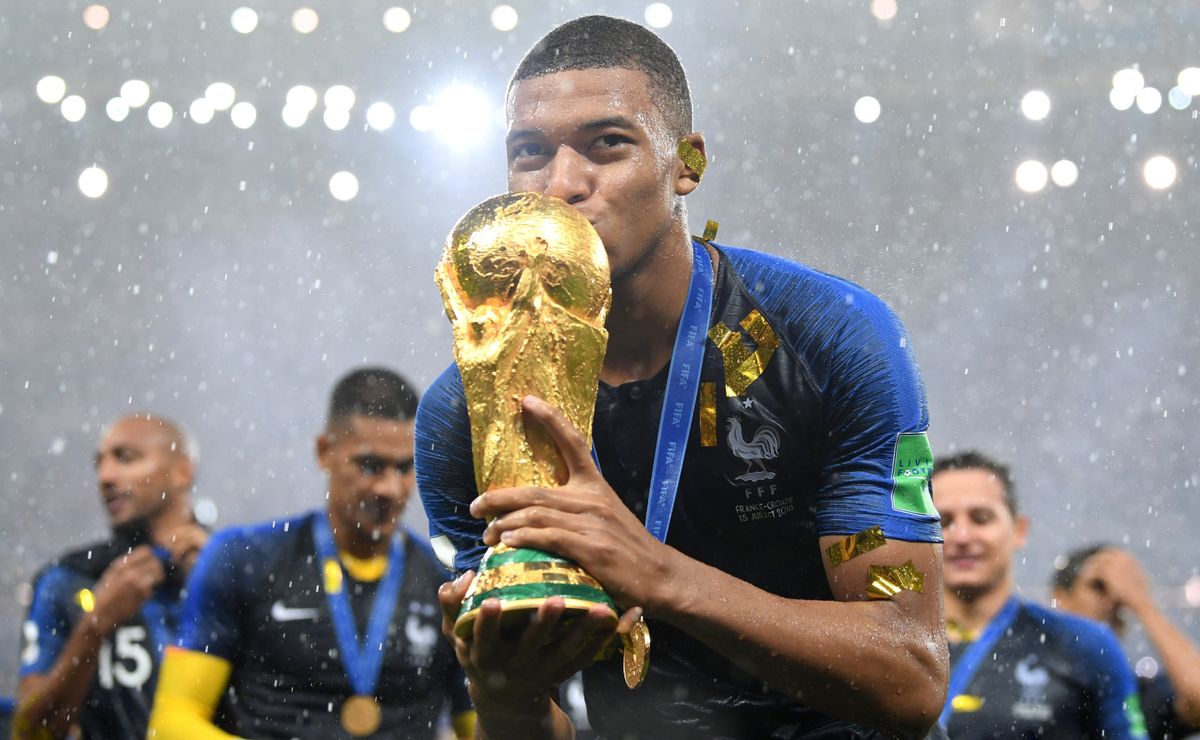
The path Kylian Mbappe has traveled—from the icy pitches of Russia to the desert stadiums of Qatar, and now toward the sprawling arenas of North America—has been nothing short of grueling and relentless. Yet, as the 2026 World Cup looms, there’s an unmistakable fire in Mbappe’s eyes, a burning desire that feels more pressing than ever to reclaim soccer’s most coveted prize. France steps into this tournament still shadowed by the luminous flash of Mbappe’s youthful brilliance in 2018, and the gut-wrenching near miss of 2022. But this isn’t just another chapter—it’s a saga shaped by hard lessons, lingering wounds, and an unyielding pursuit to lift Les Bleus back to the summit of world football. LEARN MORE

The road from Russia, through Qatar, to North America has been long, winding, and unforgiving, yet for Kylian Mbappe, the journey toward reclaiming soccer’s greatest prize has never felt more urgent. France will enter the 2026 World Cup as a nation still defined by the brilliance of its young superstar in 2018 and the heartbreak of its near-miss in 2022. Now, a new chapter begins—one driven by experience, scars, and an obsession with restoring the singular team to the summit of world soccer.
In 2018, at just 19 years old, Mbappe exploded onto the global stage, becoming the first teenager since Pele to score in a World Cup final. His electric pace, fearlessness, and clinical finishing powered France to its second world title. That triumph marked him not only as the future of the sport but as the architect of a generation. But what happened after that moment of glory changed everything.
By 2022, Mbappe was no longer the apprentice—he was the heartbeat of the team. His historic World Cup final hat-trick, the first in 56 years, pushed France to the brink of a repeat championship. They were a penalty away from rewriting history, and Mbappe was seconds away from delivering what many felt was his destiny. Instead, Argentina prevailed, and the pain of that night burned a new fire into the French captain. Now, heading into 2026, Mbappe is not just seeking another trophy—he is seeking validation of his legacy.
Weight of a nation, responsibility of a leader
As the team evolves, so does Mbappe’s role. No longer the carefree teenager running into open spaces, he has become the player who dictates rhythm, sparks attacks, and carries the psychological weight of expectation. France relies on him not just for goals, but for identity.
For Mbappe, the stakes are enormous. A second World Cup title would place him among an elite group of multi-tournament champions, reinforcing his standing among the all-time greats. A golden boot chase remains a realistic milestone, given his record-breaking scoring rate at major tournaments. On the other hand, the captaincy presents a chance to shape an era, guiding younger players through the pressure that once surrounded him.
Advertisement
The 26-year-old superstar has openly spoken about how the defeat in 2022 reshaped his ambitions. That heartbreak planted the seed for a comeback story fitting for the sport’s brightest star. He knows that history remembers World Cup winners differently. Another title would elevate him beyond generational brilliance—it would carve his name into soccer mythology.
France’s rivals and possible knockout path at the 2026 FIFA World Cup
The expanded 48-team format, the massive stadiums in the U.S., and the global spotlight create a stage unlike any Mbappe has competed on. There is a sense that this World Cup is engineered for superstars—for iconic moments, defining legacy, and soccer’s next era.
| Group I |
| France |
| Senegal |
| Winner Play-off 2 |
| Norway |
Advertisement
The December 5 draw at the Kennedy Center in Washington, D.C. outlined France’s full route toward another World Cup title. With Kylian Mbappe leading a squad stacked with elite talent, the 2018 champions enter Group I, a bracket defined by contrasting opponents and serious tactical variety.
Placed in I1, France avoids other global heavyweights, but the group still demands consistency and authority from Didier Deschamps’ team. The opening match against Senegal—Africa’s champions and one of the most physical, disciplined sides in the tournament—sets the tone. It is a challenging debut, especially for Mbappe, who will have to navigate a tightly organized defensive unit.
The second match pairs France with the winner of FIFA Continental Playoff 2, featuring Iraq, Bolivia, and Suriname. Each possible opponent brings a different style, forcing France to prepare for multiple scenarios and remain adaptable. Regardless of who qualifies, France must impose its rhythm early and avoid any loss of focus.
Advertisement
Tweet placeholder
The group stage concludes with a high-stakes duel against Norway, a nation revitalized by a new generation built on strength, structure, and growing ambition. This final fixture could determine not only qualification, but the knockout bracket position. Norway’s proactive play ensures France will face a demanding, physical test.
Despite entering as one of the favorites, Les Bleus’ path through Group I is far from straightforward. Yet with Mbappe at full maturity and a squad built to challenge for titles, the mission to reclaim the world crown remains firmly within reach. If France shows composure and control, its pursuit of a third World Cup will begin to take shape.
Advertisement
If France tops Group I, it will face the best third-place finisher from Groups C, D, F, G, or H in the New York–New Jersey area. Finishing second would set up a clash with the Group E runner-up.















Post Comment