







West Ham’s Financial Abyss: Could Relegation Trigger an Unthinkable Collapse?
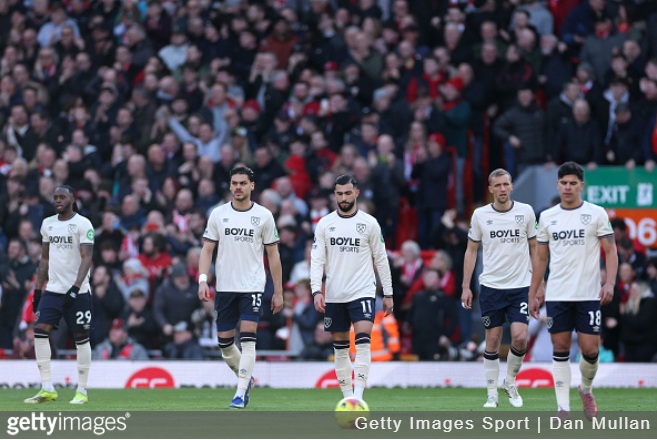
West Ham United finds itself perilously close to a financial brink few outside the club’s inner circle fully grasp. Imagine a staggering £104 million loss — the largest since their Premier League return in 2012 — piled on top of soaring wages and crushing transfer debts. It’s a cocktail that no football club wants to swallow, especially when relegation looms like a dark cloud. The club’s own annual report doesn’t shy away; it’s a stark warning of “serious and severe” fallout if the hammer drops and they slip into the Championship. The economic leap from Premier League riches to second-tier realities isn’t merely a downgrade — it’s potentially catastrophic. West Ham’s wage bill, climbing sharply thanks to big-name signings, paints a portrait of a club swinging for glory rather than bracing for a relegation scrap. Add to that nearly £22 million in interest payments, a dip in turnovers, and a maze of loans, and you start to see a club walking a razor-thin line between ambition and financial peril. If relegation happens, it won’t be a reset button — it’ll be a fire sale of prized players, a desperate scramble to keep the lights on. And with ownership stakes wrapped in uncertainty and hopes for fresh capital hanging by a thread, the stakes couldn’t be higher. This isn’t just about a football season; it’s about the very survival of a club many hold dear. LEARN MORE
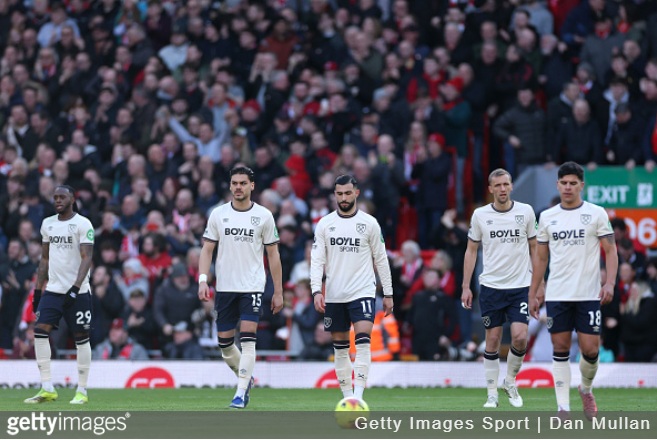
A £104million loss, soaring wages, and heavy transfer debts show a club gambling on Premier League survival it can’t guarantee.
West Ham United’s newly published accounts make one thing painfully clear: the club is standing far closer to the financial edge than many supporters might like to believe. A £104.2 million loss — their biggest since returning to the Premier League in 2012 — is alarming enough on its own. But when combined with rising wages, looming transfer debts, and the very real possibility of relegation, the picture becomes even more troubling.
The club itself doesn’t mince words. Its annual report warns of “serious and severe” consequences if West Ham fall into the Championship this season. And frankly, they’re right to sound the alarm. The Premier League’s finances are a different universe compared with the second tier. Dropping out of the top flight would put West Ham in a position where cuts are unavoidable, sales are inevitable, and ownership would likely need to inject money simply to maintain stability — just as they did after the 2010–11 relegation.
The wage bill tells its own story. Jumping from £161 million to £176 million, largely to accommodate high‑profile signings like Max Kilman, Niclas Füllkrug, Aaron Wan‑Bissaka and Jean‑Clair Todibo, West Ham have spent like a club expecting European nights, not relegation battles. Add the £195 million they owe in transfer instalments over the next three years, and their 77 per cent wages‑to‑turnover ratio looks less like ambition and more like overreach.
The irony is that despite these outlays, West Ham are two points from safety and fighting for survival — all while paying nearly £22 million in interest and drawing heavily on a £124 million loan facility. Their turnover has dropped from £269 million to £228 million, the kind of decline that should set off emergency klaxons at board level.
If relegated, West Ham would almost certainly need to sell several major assets: Jarrod Bowen, Todibo, Crysencio Summerville, Kilman, Mateus Fernandes, Alphonse Areola. It wouldn’t be a summer of rebuilding — it would be a summer of liquidation.
The ownership structure adds another layer of instability. Investors are circling David Gold’s 25 per cent stake, but the reality is none of them can gain meaningful control unless David Sullivan or Daniel Křetínský agree to sell. That means fresh capital remains a hope, not a plan.
Supporters have long asked for a more modern, analytics‑driven approach behind the scenes. Some of the potential investors reportedly come from the tech sector, which could be an encouraging sign — but only if those investors can meaningfully influence decision‑making. Right now, they can’t.
The bottom line is this: West Ham are operating with Premier League expenses and Championship risk. Their financial model only works in the top flight. Relegation would blow a crater in it. The club’s warning may be blunt, but it is also honest. For all the big signings and managerial changes, West Ham are one bad run away from a full‑scale financial crisis.
Survival this season isn’t just about pride or sporting ambition — it’s about the very stability of the club.
Taking it week-by-week, Nuno Espirito Santo’s men must make the most of their upcoming trip to Fulham, before grappling with title contenders Manchester City and Aston Villa. Their FA Cup meeting with Brentford on March 9 seems almost completely insignificant at this point.

















Post Comment