







Chicago’s Frozen Face-Off: Uncovering the Truth Behind the Bear Weather Myths Ahead of the Rams Clash
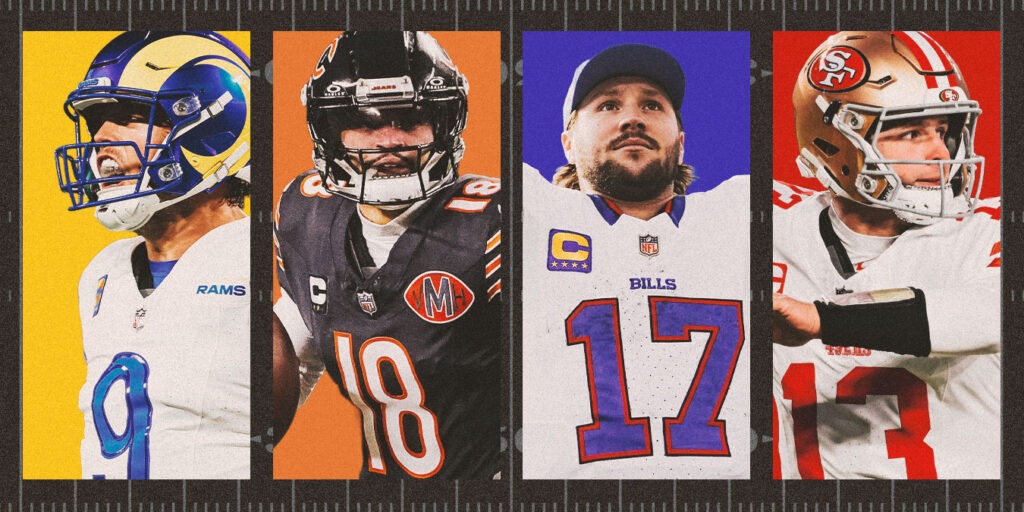
Have the Bears been dominant in âBear Weather?â And what does it mean for an NFL divisional game that’s expected to be played in extreme cold against the Rams?
Ever heard of the urban legend-level occurrence known as âBear Weather?â
The mere mention of the term is likely to cause some Chicago Bears fans to get amped up, paint their chest and brace for the cold. It hurts so good.
Others, however, simply roll their eyes.
For those who arenât familiar with the notion, every time the Bears have a home game with temperatures expected to be abnormally frigid, fans, media and players immediately begin talking about the supposed advantages of Bear Weather.
Yes, the Bears play on the shores of Lake Michigan, where Alberta Clippers and lake-effect snow have been known to cause havoc on NFL Sundays. And it’s going to be a factor once again this Sunday night when the Bears welcome the Los Angeles Rams in the NFC divisional round.
With the game-time temperature expected to be around 10-to-20 degrees depending on where you look, the Jack Frosts on the home team most certainly have the advantage. After all, every Bear is from the Midwest and every Ram is from Southern California, right?
Insert eye-roll emoji here.
Bears fans of a certain age know the reality of Bear Weather. Sure, the beloved 1985 team dominated the New York Giants 21-0 in the NFC divisional game or âFreezer Bowlâ that had a temperature of 14 degrees and a wind chill of minus-13 during its run to the Super Bowl.
But thereâs been equally as much cold, cold heartache. At the end of the 1987 season, Washington came into Soldier Field and beat the Bears 21-17 in an NFC divisional game that was played in the single digits.
And a year later, there was a lot of talk about how the San Francisco 49ers, led by Joe Montana and Jerry Rice, would never be able to get their passing game going with 29-mph winds that produced a minus-26 wind chill for the NFC championship game on Jan. 8, 1989.
The final score was 49ers 28, Bears 3.
Ok, we’ll stop with the memories and anecdotes.
What about more recently? Have the Bears been dominant in âBear Weather?â And what does it mean for this weekendâs divisional game against the Rams?
Because it’s likely we can assume the temperature for Sunday will be somewhere under 20, let’s use our historical weather data to look at Chicago home games that had a temperature of 20 degrees or colder at kickoff over the past 35 years (since 1991).
In those 14 contests (including the playoffs), Chicago has won eight of them.
Bears Home Games, 20 Degrees or Lower – Since 1991 (Including Playoffs)
- 2 (Degrees) â Bears 20, Packers 17 OT (Dec. 22, 2008)
- 8 â Bears 31, Browns 3 (Dec. 14, 2025)
- 8 â Bears 45, Cowboys 28 (Dec. 9, 2013)
- 9 â Bills 35, Bears 13 (Dec. 24, 2022)
- 11 â Packers 30, Bears 27 (Dec. 18, 2016)
- 12 â Bears 16, Falcons 3 (Dec. 18, 2005)
- 12 â Texans 24, Bears 5 (Dec. 19, 2004)
- 13 â Lions 20, Bears 14 (Dec. 26, 1993)
- 16 â Bears 35, Packers 7 (Dec. 23, 2007)
- 18 â Eagles 25, Bears 20 (Dec. 18, 2022)
- 19 â Bears 23, Jaguars 10 (Dec. 7, 2008)
- 20 â Packers 21, Bears 14 (Jan. 23, 2011/NFC Champ)
- 20 â Bears 23, Bears 13 (Dec. 3, 2006)
- 20 â Bears 20, Lions 10 (Nov. 3, 1991)
But if we take out games against other northern, outdoor, cold-weather teams (Green Bay Packers, Cleveland Browns, Buffalo Bills, Philadelphia Eagles) and leave those versus southern, western or indoor teams, the teamâs record improves to 5-2.

The Rams, on the other hand, have only had two games that had a game-time temperature of 20 or lower since 1991. Both took place at Lambeau Field, where they lost 28-13 (8 degrees) on Dec. 20, 1992 and 24-12 (15 degrees) on Dec. 19, 2022.
If we increase our kickoff temp to 30 degrees or colder, the teamâs record is 2-4. That includes a 15-6 loss at Soldier Field with the game-time temperature at 29 degrees on Dec. 9, 2018.
If we warm up the game-time temperature to 40 degrees or colder, the Rams donât get any better at 8-21 over the past 35 years. Theyâre 1-4 at Chicago in such games, with the last win coming on Nov. 8, 1998 when the temperature was right at 40.
Matthew Stafford, however, believes the Rams should feel good heading into this icy challenge after they took down the New York Jets 19-9 on the road with the temperature at 23 degrees at kickoff on Dec. 22 of last season.
“You just adjust to whatever the weather allows you to do,â said the NFL MVP candidate, who also added his injured finger wonât be an issue. âAnd I think if itâs just cold with a little bit of wind, we go play.
âI mean, that’s playoff football, right? Cold weather in Chicago, windy day, there’s nothing better than that in my mind, so I’m excited for it.”
But Stafford certainly didn’t heat up the frigid affair with his performance against the Jets. He completed 14 of 19 passes for just 110 yards with a touchdown and an interception. Puka Nacua had eight catches but only for 56 yards.

Believe it or not, Stafford has never played a game with a game-time temperature under 20 degrees even though he spent 12 seasons with the Detroit Lions. Yes, the Lions play in a dome (just don’t ask Nacua), but they wouldâve played Green Bay and Chicago in December pretty routinely, right?
Stafford, though, only played at Soldier Field twice and Lambeau three times in December over that span, while the Lions only reached the postseason three times during his tenure â taking on the New Orleans Saints, Dallas Cowboys and Seattle Seahawks on the road.
Stafford has played in four games at 30 degrees or colder, though the one against the Jets is the lone contest that has taken place since the 2018 season. Overall, heâs thrown for an average of 186.0 yards in those games but with a solid ratio of six TDs and one interception. Stafford has a career average of 270.0 passing yards per game.
âI do know this will be the coldest game that theyâve played this year,â Bears coach Ben Johnson told reporters. âThatâs something I recognized when we found out who the opponent was. But I think (Stafford) has played well in cold games in his past. I donât know how much of an advantage that gives you over their passing game, necessarily. There are a lot of elements that go into a game like this.â
So consider this: As we mentioned, over his 17 seasons in the league, Stafford has never played in a game in which the kickoff temperature was 20 or lower. Caleb Williams, however, has already played in three such games over his two seasons.

Though he didnât need to do a whole lot on his own in a 31-3 rout of the Browns on Dec. 14, Williams posted the third-highest passer rating of his 2025 season and the sixth-best mark of his career in the coldest game of his two pro seasons.
He also led furious comebacks in those two meetings against the Packers, one that snapped the franchiseâs 11-game losing streak in the rivalry at the end of the 2024 season and another that fell just short in Green Bay earlier this season.
What does this all mean? Factually speaking, Bear Weather is a myth.
But that doesnât mean it can’t still be a factor if the Bears and Rams both believe in it. Â
For more coverage, follow along on social media on Instagram, Bluesky, Facebook and X.
The post Bear Weather: What’s Real and What’s a Myth Heading Into Chicago’s Icy Showdown With the Rams appeared first on Opta Analyst.












Post Comment