





From Mound to Mic: How Scott Radinsky Defied Odds in Both Punk Rock and Pro Baseball for Over 30 Years
Advertisement
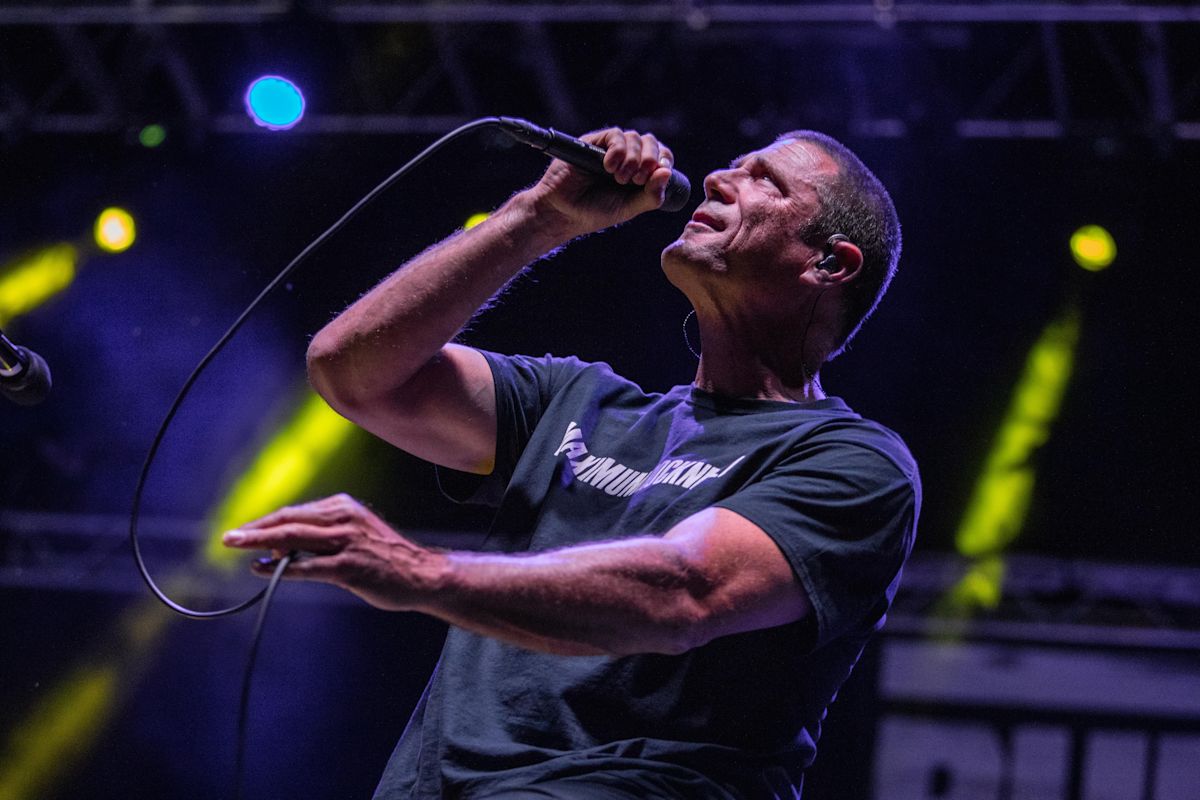
I got a chance to speak to Radinsky by phone as he prepared to play a pair of shows in Hawaii with Pulley, and asked him about the changing natures of punk rock and baseball over the past 30 or so years, as well as his legacy in both arenas.
SB NATION: When I got the press release about the new 7″, I was sort of taken aback, learning that Esteem Driven Engine came out 30 years ago, which means I’ve been listening to Pulley for 30 years now. How does it feel to realize that this is such a big anniversary for the band?
SCOTT RADINSKY: It’s crazy when you think about how fast time goes. I was part of this compilation that came out in ’84, by our local area in Oxnard, called Nardcore, and that’s already surpassed the 40-year anniversary. I haven’t digested or really swallowed like, wow, maybe we’ve done a lot. We put out a lot of music. We’ve played a lot of shows, we’ve been doing it consistently for a lot of years, but I think we’re all just grateful that we still have the opportunity. So the fact that 30 years or 40 years snuck up so quick — it’s pretty amazing.
I really enjoy the songs on the new 7″. You and I have both been following bands for many years, and sometimes you’ll run into a band that stays together, but the music sort of takes a dip over time. To me at least, everything that Pulley has ever put out has maintained that same level of quality. Is there a secret to that?
I think we just kind of stuck to what we thought we were good at and didn’t really try to invent ourselves into something different. There was recently a re-release of the second Bad Religion album that ever came out, called Into the Unknown, and it was completely experimental, with an organ and everything else. And they regretted that, or maybe got that out of their system, and then they went on to just continue doing what they were good at. And I try to think about a Bad Religion release, and you kind of know what you’re going to get. And I think that’s the goal, when we write is not to be completely monotonous and just regurgitate what we’ve previously done. We have a style that we started with, and we’ve kind of stuck with and maintained it and that’s just kind of what comes out of us naturally when we write. So. I don’t think it’s a conscious effort. I just think it’s, “Oh, we’re writing new songs and this is what we do and this is who we are.” So this is what it’s going to sound like.
You were born in Glendale, you grew up in Ventura County, where you got drafted out of high school. Who did you root for when you were growing up?
Well, back then all we had was the Dodgers. I was a little north of L.A., so I definitely wasn’t an Angels fan. I was a Dodger fan, especially during the ’70s and early ’80s, when I was really following them.
So when when you got a chance to finally pitch for the Dodgers as your second major league team, what was that like for you?
I can’t even put it into words. The day I became a free agent and the White Sox — I don’t know what the right term is — non-tendered me? My first thing I wanted to do is say [to my agent], “Let’s see if we can get to the Dodgers.” I actually had to sign a minor-league deal in order to get myself to camp, and I remember the [Dodgers] GM, Fred Claire, calling me. It was a Sunday, and he said, “We’re going to give you every opportunity.” And I know it’s probably cocky, but I said, “If you get me to spring training, I’m not worried about making your team.” And then like 10 minutes later, Tommy Lasorda called me and gave me his whole bullshit, you know: “This is the best organization. We’re gonna give you every opportunity,” and blah, blah, blah, blah, blah. And it was awesome. I got to spring training. I went to Vero Beach and that’s the field that I saw my whole life on TV, you know, during [spring training] when they play a game on a Saturday. And it was 3 of the best years of my life. I lived at home. I had a 33-minute drive to the field. It’s every kid’s dream, and I got to live it for 3 years.
When you wound down your career, what was the transition like for you to go from being a player to coaching?
You know, I think any player that gets into his 30s and gets towards the end of his career … now you’re all of a sudden standing in the outfield during batting practice shagging with a 22- [or] 23-year old. You kind of have this, elderly statesman [role] where they start asking you questions. You’re the veteran of a team, so you almost take that responsibility on as a player.
Advertisement



Post Comment