


How Alabama’s Shrewd Buyouts Are Quietly Out-Earning Auburn—and What It Means Next
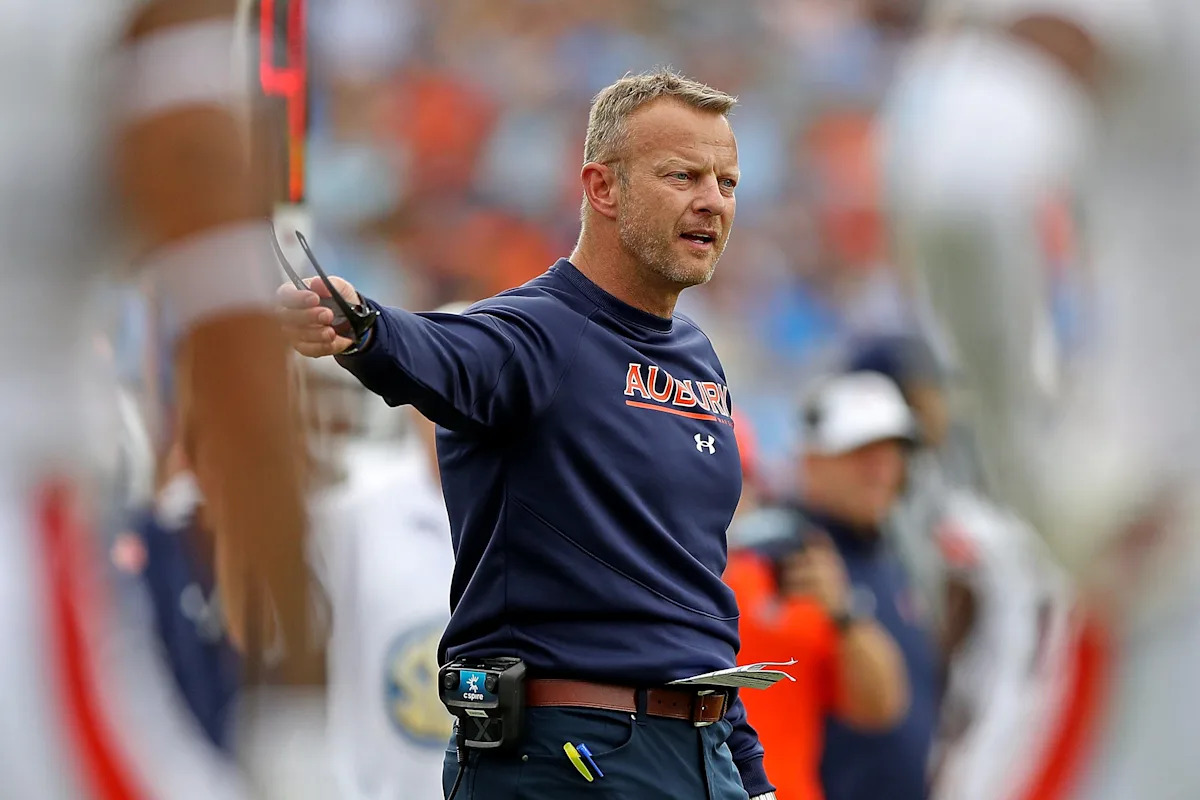
Colin Gay examines how Alabama will replace TE Josh Cuevas.
The youth movement started in the 2025 recruiting cycle with two four-star additions in Kaleb Edwards and Marshall Pritchett. Mack Sutter continued that trend in 2026, along with two transfer additions — Josh Ford and Jaxon Shuttlesworth — who have three seasons of eligibility each.
Alabama is looking to the future with its tight ends room, and seemingly has stability for the years to come.
That starts with Kaleb Edwards, who was thrown into the fire as an Alabama freshman despite enrolling in the program during the summer.
Edwards was the only other tight end on the Alabama roster, along with Cuevas, to play more than 80 snaps in 2025, playing 369 across 15 games, per Pro Football Focus. As a true freshman, Edwards had 11 catches for 150 yards and a touchdown.
Jamey Mosley is getting a crack at on-field coaching.
Stanford head coach Tavita Pritchard announced the hiring of Jamey Mosley as the Cardinal’s defensive line coach, adding a former Alabama walk‑on turned national champion who spent the last five seasons on the Crimson Tide’s defensive staff.
Mosley, a Mobile, Ala., native, worked with Alabama’s defensive line as a graduate assistant and defensive analyst from 2021–25. He was part of multiple top‑20 defensive units, including the 2025 group that helped propel the Crimson Tide to the College Football Playoff while ranking 13th nationally in total defense and tied for 19th in tackles for loss.
Pritchard praised Mosley’s background and coaching trajectory. “Jamey Mosley embodies everything we want in a Stanford football coach — competitor, connector, and a championship mindset,” Pritchard said. “He’s a rising star in this profession, and I’m excited for our defensive linemen to develop under his leadership.”
Good for him.
Last, the NCAA is signaling that they may pursue sanctions against schools who played players under temporary injunctions.
A dozen athletes have been granted injunctions for extended eligibility in the last year and many of the cases continue onward, where the NCAA has a chance to win the case and then, in turn, penalize schools for playing those athletes.
As it turns out, the reigning football national champions are involved. In its march to the national title this year, Indiana used a player originally deemed ineligible by the NCAA but permitted to play through a court’s injunction: safety Louis Moore, who played in all 16 games and finished third on the team with 88 tackles. The case, filed in Texas, is continuing onward.
If the NCAA eventually wins, could the association vacate the Hoosiers’ national championship? That is highly unlikely. But the NCAA wants these cases to continue as a way to (1) afford it the option to, at the very least, fine a school for playing an ineligible player, (2) set judicial precedent for future cases and (3) create a chilling effect or deterrent for other school administrators contemplating using an ineligible player.
Like Charles Bediako, those players sued the NCAA for eligibility. The difference is that they were granted temporary injunction, so their teams continued to play them. The NCAA has appealed those injunctions, and the players’ representation has moved to dismiss those appeals as moot since the players involved are now out of eligibility. The NCAA is pursuing the appeal, however, in effort to see the injunctions overturned so that they may punish the institutions for playing ineligible players.
Advertisement
CHECK OUT THE HOTTEST DEALS ON AMAZON!
Topps, Upper deck, Donruss, Fleer, Score, Upperdeck 600 Baseball Cards Including Babe Ruth, Unopened Packs, Many Stars, and Hall-of-Famers. Ships in White Box Perfect for Gift Giving.
$21.25 (as of April 7, 2026 11:07 GMT +00:00 - More infoProduct prices and availability are accurate as of the date/time indicated and are subject to change. Any price and availability information displayed on [relevant Amazon Site(s), as applicable] at the time of purchase will apply to the purchase of this product.)
2025 Topps Universe WWE Sealed Blaster Value Box (1 Numbered Card Per Box)
$55.00 (as of April 7, 2026 11:07 GMT +00:00 - More infoProduct prices and availability are accurate as of the date/time indicated and are subject to change. Any price and availability information displayed on [relevant Amazon Site(s), as applicable] at the time of purchase will apply to the purchase of this product.)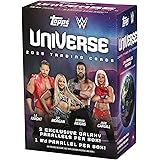
2025 Topps Universe WWE Wrestling BLASTER box (6 pks/bx)
$59.99 (as of April 7, 2026 11:07 GMT +00:00 - More infoProduct prices and availability are accurate as of the date/time indicated and are subject to change. Any price and availability information displayed on [relevant Amazon Site(s), as applicable] at the time of purchase will apply to the purchase of this product.)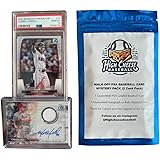
High Cheese Baseball Walk Off Mystery Pack - 2 Cards, 1 PSA Graded & 1 Autograph/Relic Ungraded
$39.99 (as of April 7, 2026 11:07 GMT +00:00 - More infoProduct prices and availability are accurate as of the date/time indicated and are subject to change. Any price and availability information displayed on [relevant Amazon Site(s), as applicable] at the time of purchase will apply to the purchase of this product.)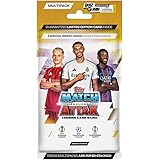
2025/26 Topps Match Attax Multipack - Look for a Guaranteed Limited Edition Card
$11.99 (as of April 7, 2026 11:07 GMT +00:00 - More infoProduct prices and availability are accurate as of the date/time indicated and are subject to change. Any price and availability information displayed on [relevant Amazon Site(s), as applicable] at the time of purchase will apply to the purchase of this product.)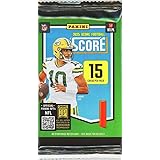
2025 Panini SCORE Football EXCLUSIVE HUGE Factory Sealed MEGA Foil Pack with 15 Brand New Cards Including ROOKIES & PARALLEL! Look for Travis Hunter,Jaxson Dart, Ashton Jeanty,Cam Ward & Many More!
$14.95 (as of April 7, 2026 11:07 GMT +00:00 - More infoProduct prices and availability are accurate as of the date/time indicated and are subject to change. Any price and availability information displayed on [relevant Amazon Site(s), as applicable] at the time of purchase will apply to the purchase of this product.)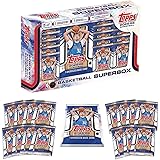
2025-26 Topps NBA Basketball Flagship Collection Trading Card Box (1 Oversized Card Per Box)
$103.49 (as of April 7, 2026 11:07 GMT +00:00 - More infoProduct prices and availability are accurate as of the date/time indicated and are subject to change. Any price and availability information displayed on [relevant Amazon Site(s), as applicable] at the time of purchase will apply to the purchase of this product.)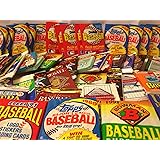
100 Vintage Baseball Cards in Old Sealed Wax Packs - Perfect for New Collectors
$15.59 (as of April 7, 2026 11:07 GMT +00:00 - More infoProduct prices and availability are accurate as of the date/time indicated and are subject to change. Any price and availability information displayed on [relevant Amazon Site(s), as applicable] at the time of purchase will apply to the purchase of this product.)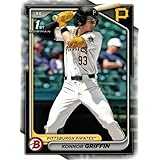
2024 Bowman Draft #BD-22 Konnor Griffin Pre-Rookie Baseball 1st Bowman Card
$30.00 (as of April 7, 2026 11:07 GMT +00:00 - More infoProduct prices and availability are accurate as of the date/time indicated and are subject to change. Any price and availability information displayed on [relevant Amazon Site(s), as applicable] at the time of purchase will apply to the purchase of this product.)






Post Comment